Realtime AI News
NVIDIA's cuDSS reaches general availability, moving simulation workloads onto GPUs
NVIDIA said cuDSS, a library in its CUDA-X family, is now generally available. The release targets a critical step in engineering and scientific simulation, shifting that computation onto GPUs rather than leaving it on CPU-bound paths.
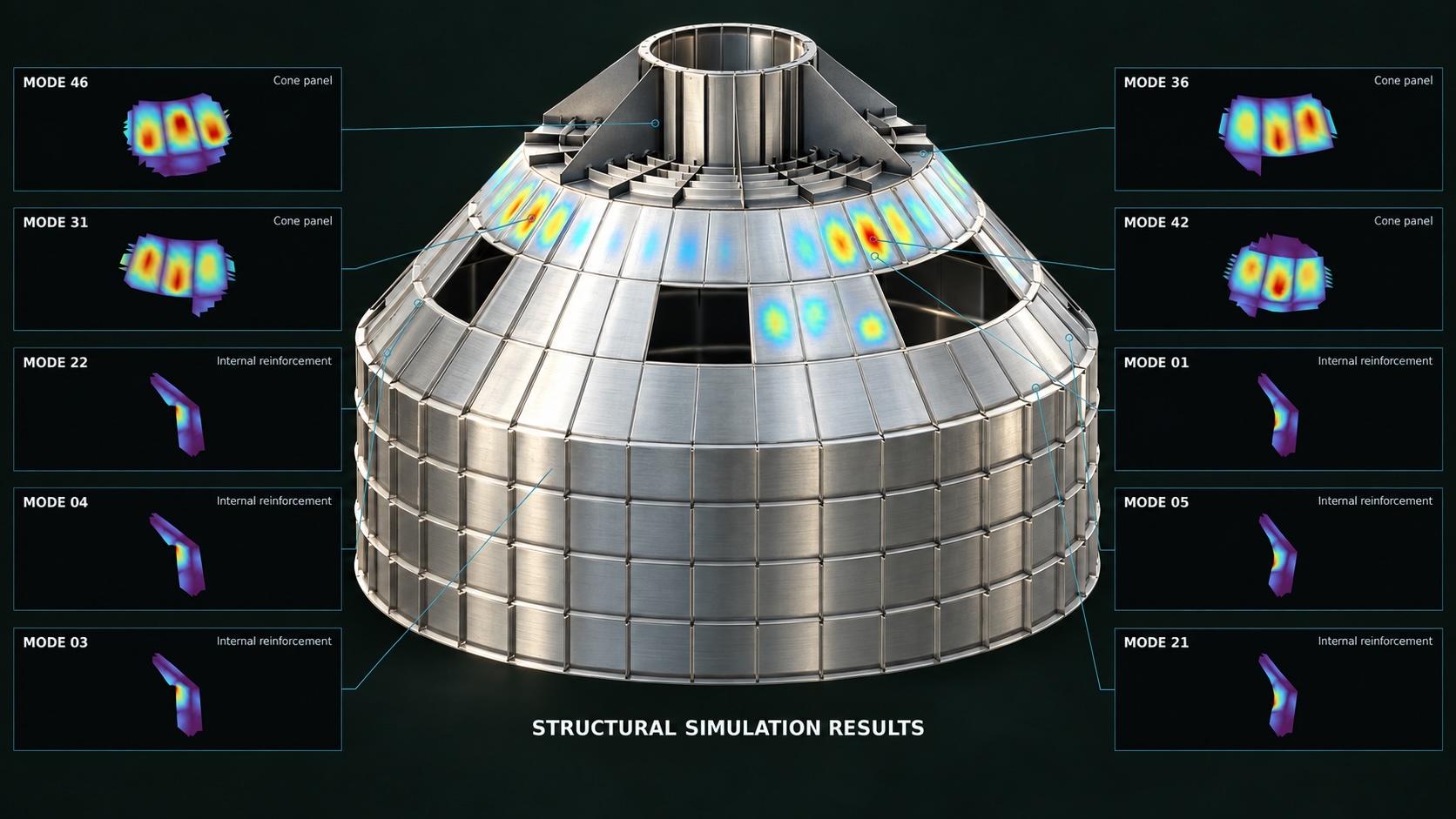
NVIDIA announced that cuDSS, a library in its CUDA-X software family, is now generally available. According to the company's blog post, the library takes a critical part of engineering and scientific simulations and moves that computation onto GPUs.
Simulation is the step in modern engineering where designs are tested before they exist. Advanced chips, aircraft and industrial systems are all evaluated numerically before anything is fabricated, and the more complex the design, the larger the calculation and the longer the wait.
CUDA-X is NVIDIA's collection of libraries that package acceleration work into components developers can call directly. The jump to general availability matters because it signals the shift from an early-access tool to something meant for production use, which is why the company gave it a standalone announcement rather than a line in a changelog.
The interesting part is where the library lands. GPU acceleration has mostly been discussed in the context of model training and inference, while engineering simulation has remained largely CPU-centric. Pulling that step onto GPUs extends the CUDA ecosystem's reach into chip design and industrial R&D workflows.
For simulation teams, the question is rarely whether GPUs are interesting; it is what migration costs. Existing solver code, accuracy validation and the handoffs to pre- and post-processing tools all have to be reassessed, and a library reaching general availability is usually the point at which those engineering concerns become something an organization can formally adopt and maintain.
NVIDIA's post names advanced chips, aircraft and industrial systems as the kinds of problems this targets. What those domains share is that a single design iteration is expensive, so shorter compute time translates fairly directly into more design exploration.
The evidence to watch now sits on the ecosystem side: whether mainstream simulation software integrates the library, whether customers publish concrete speedups for real workloads, and how the deployment experience holds up on mixed clusters. General availability is a starting line, not a verdict.
Sources
Why it matters
For NVIDIA, this pushes the CUDA ecosystem from AI workloads into the core of engineering computation, where software-stack lock-in tends to last for years. For simulation teams, the deciding variable is not interest but the real cost of code migration and accuracy validation.
Nearby Updates
All10/21, 18:30
Nvidia open-sources its factory agent blueprint, with Siemens as first anchor
Nvidia released its Factory Operations Blueprint, FOX, in early access on GitHub, giving developers a way to build always-on factory manager agents and specialists for inspection, root-cause analysis and fleet management. Siemens is already integrating FOX-built agents into Intelligence Center X, an effort Nvidia estimates can cut costs by 20%.
10/21, 18:30
Nvidia's European cloud partners scale up, and start fencing in agents
Nvidia used GTC Berlin to detail how European, Nordic, African and Central Asian cloud partners are expanding regional AI capacity on its DSX platform, with Nscale reporting 37% more GPUs and nearly 50% higher inference throughput inside the same power budget. It also introduced the OpenShell reference architecture, which enforces agent access boundaries in silicon.
10/21, 18:30
NVIDIA expands confidential computing to help frontier model builders scale securely
NVIDIA is expanding its confidential computing capabilities so frontier model builders can spread workloads across global infrastructure while keeping models and data protected. The same-day OpenShell Reference Architecture is pitched as part of a portfolio for deploying agents safely at scale, with confidential computing sitting underneath as the layer that protects what those agents depend on.
10/21, 18:45
Google Cloud and NVIDIA Take Vera Rubin to General Availability With A5X Instances
Google Cloud and NVIDIA said A5X instances built on NVIDIA Vera Rubin reach general availability next month, with planned expansion into Europe. The platform combines Vera Rubin NVL72, ConnectX-9 SuperNICs, Google Cloud's Virgo network and fourth-generation liquid cooling, and Google Cloud plans to scale to as many as 960,000 Rubin GPUs across multiple sites.