Realtime AI News
NVIDIA Extends Slurm to Put Quantum Processors Inside Supercomputing Workflows
NVIDIA is expanding Slurm's support for quantum processors so supercomputing centres can schedule quantum hardware alongside their existing scientific workloads. The move lands as nearly 30 centres prepare to deploy more than 50 quantum processors, a roughly sevenfold rise in deployments over five years.
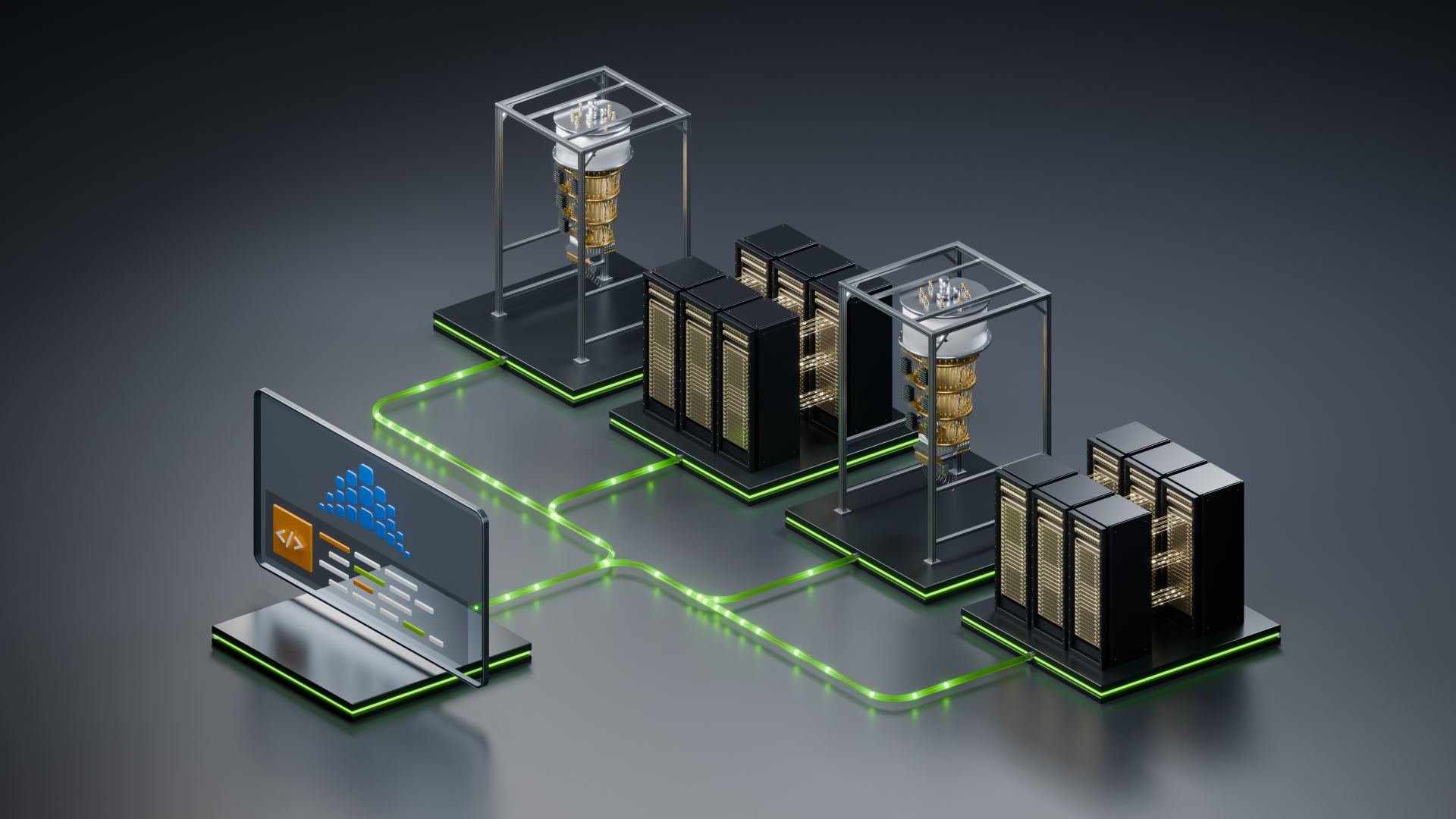
NVIDIA is extending Slurm, the job scheduler used across scientific supercomputing, to cover quantum processors, the company said in a blog post.
The timing is tied to adoption numbers NVIDIA cites: quantum processor deployments at supercomputing centres have grown nearly sevenfold over the past five years, and close to 30 centres worldwide are now in the process of deploying more than 50 quantum processors.
Slurm is the software that decides which job runs on which hardware, and when. Because those centres already use it for classical scientific workloads, adding quantum support means quantum hardware can be requested and queued through the same system rather than through a separate scheduling stack.
That is the practical argument in the announcement. New accelerator types usually arrive with their own tooling, their own scheduling quirks and their own operational burden; folding them into the scheduler operators already run lowers the cost of trying them.
It also matches how quantum is being positioned in the broader stack: not as a standalone machine that replaces supercomputers, but as a specialised resource called for particular problems while GPUs and CPUs handle the rest.
What the announcement does not detail is the ecosystem side. Which vendors' quantum processors are supported, what the programming interface looks like, and when the capability becomes generally available are not specified in the published summary.
In absolute terms the footprint is still small. Fifty-plus processors across 30 centres is research-scale, not a production fleet, which is why scheduling integration matters more than raw capacity at this stage.
The next test is whether jobs mixing quantum and classical resources become routine enough that researchers stop treating quantum as a separate experiment, and whether Slurm's quantum support keeps up with the hardware roadmaps now being announced.
Why it matters
Putting quantum processors behind the scheduler supercomputing centres already run lowers the operational cost of experimenting with them, which matters more for adoption right now than the modest number of processors deployed.
Nearby Updates
All11/17, 00:00
Lambda Adopts NVIDIA Photonics CPO Switches to Harden 10,000-GPU AI Factories
Lambda is deploying NVIDIA Photonics co-packaged optics (CPO) switches to connect NVIDIA GB300 NVL72 racks carrying more than 10,000 GPUs. The cloud provider is betting that a faster, more efficient and more resilient network is what keeps very large training clusters productive.
11/17, 00:07
Report: OpenAI Explored Buying Interpretability Startup Goodfire for Over $5 Billion
OpenAI explored acquiring the AI interpretability startup Goodfire in a transaction valued at more than $5 billion, The Information reported. The figure, if accurate, would rank among the largest sums ever attached to a company working on AI interpretability.
11/16, 23:52
Audible turns to AI audio previews to help listeners pick audiobooks
Audible has added AI-generated audio previews that summarize a book's themes and reader reception alongside the traditional narrated sample. The feature targets audiobook discovery, where a short sample reveals the narrator but says little about whether a long book is worth the commitment.
11/16, 23:02
US Tightens AI Chip Export Controls to Cover Remote Access to Overseas Compute
The Commerce Department is rolling out an interim final rule requiring licenses to send AI chips and servers to data centers anywhere in the world if that compute could reach companies in China or other restricted countries. It sets a 12 million TPP threshold, roughly 750 Nvidia H100 or H200 chips, and rescinds the Biden-era AI Diffusion Rule.