English translation
Integrate OpenAI model
AI Article Decision Snapshot
Turn the lesson into workflow, model, budget, and security checks before choosing tools.
Use this quick snapshot before leaving the article. It keeps the next search tied to practical AI software, model/API, cost, privacy, and implementation questions.
Workflow fit
Identify the real job behind the article: coding, research, document review, support, analytics, content, or internal automation.
Model or tool decision
Decide whether the next step is a software shortlist, an AI tool comparison, an API platform choice, or a model benchmark.
Budget and usage signal
Estimate seats, API calls, prompt volume, retries, review time, and fallback work before assuming the workflow is cheap.
Security and privacy review
Check whether source code, customer data, private documents, prompts, logs, or embeddings will enter the AI workflow.
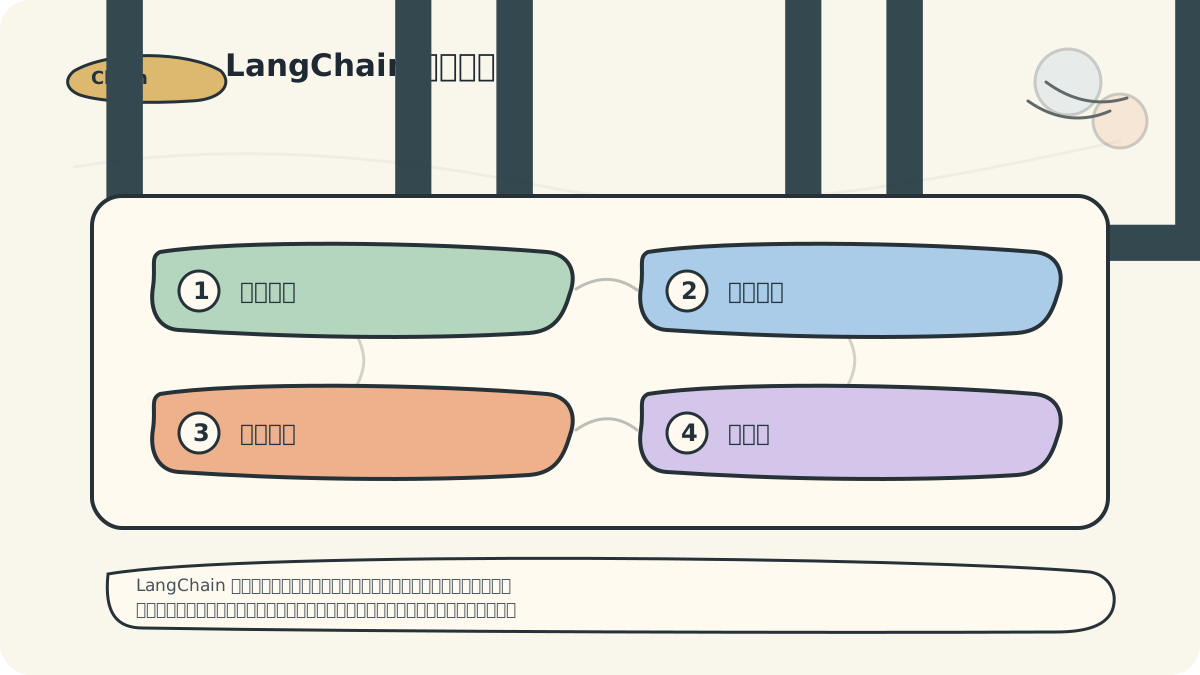
LangChain’s core concepts can be connected sequentially along a data flow: user input first enters a prompt template; the templated prompt is then passed to a language model; and finally, the model’s output undergoes parsing and post-processing. With this perspective, a “chain” is not mystical—it’s simply an ordinary data pipeline.
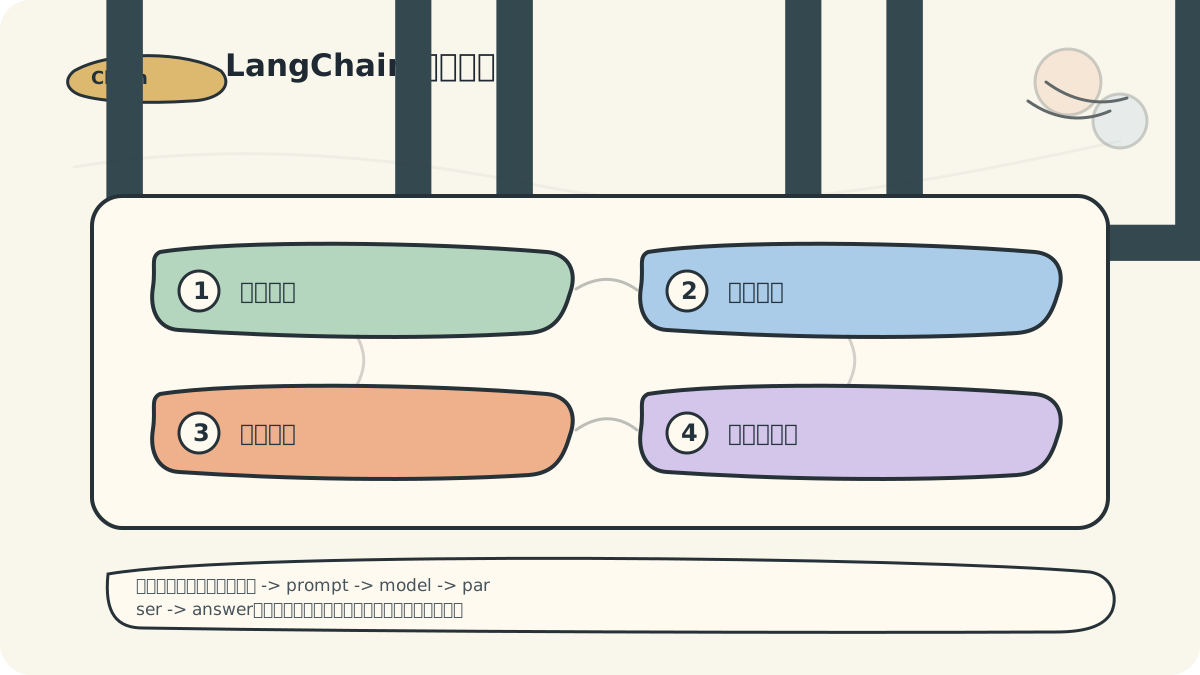
I’ll draw an arrow: User Query → Prompt → Model → Parser → Answer. Each time we introduce a new component, we’ll annotate precisely where it plugs into this pipeline.
In the previous article, we introduced LangChain—a powerful framework designed to simplify and enhance interactions with diverse language models. In this article, we dive deeper into LangChain’s core concepts: how it’s structured, and how it empowers developers to build exceptional applications.
Core Components of LangChain
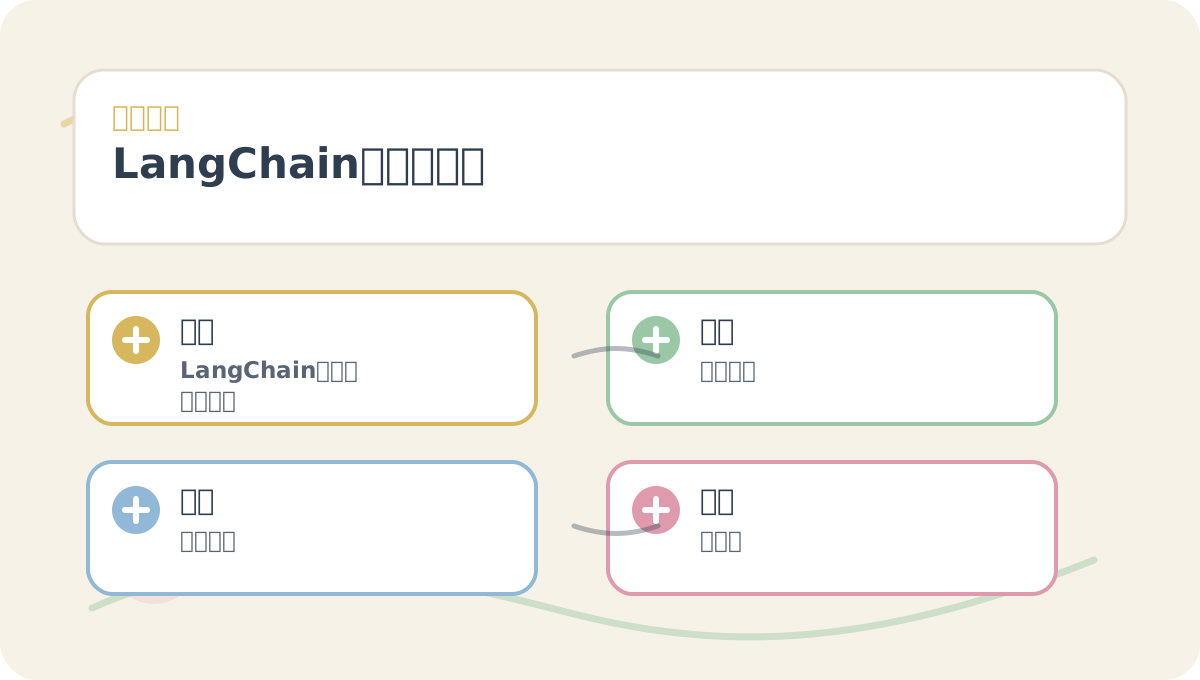
Before reading “LangChain’s Core Concepts” in full, quickly scan the accompanying diagram: it highlights what question is being asked, which concepts need to be clearly distinguished, which step invites hands-on experimentation, and what criteria define successful completion.
1. Model Integration
LangChain enables seamless integration of multiple language models through a unified interface. Whether you’re using OpenAI’s GPT series or custom-built models, LangChain lets you invoke them effortlessly. Understanding this component is crucial: it grants developers the flexibility to swap or combine models on demand—without rewriting core logic.
Example:
Suppose you’re building a chatbot powered by OpenAI’s GPT-3. If you later decide to switch to another model, you only need to update the model integration layer—not the entire application.
from langchain.llms import OpenAI

# Integrate OpenAI model
model = OpenAI(api_key="your_api_key")
response = model.generate("Hello, how’s the weather today?")
print(response)
2. Memory Mechanism
Another core concept in LangChain is memory: the ability to persist contextual information across interactions, enabling more natural, coherent dialogue. Memory helps the model retain key details—making conversations feel fluid and human-centered.
Example:
In a chatbot, memory can track user preferences. When a user says, “I like blue cats,” the system remembers that detail and references it meaningfully in future exchanges.
from langchain.memory import ConversationBufferMemory

# Initialize memory
memory = ConversationBufferMemory()

# Log conversation messages
memory.add_message("User: I like blue cats")
memory.add_message("Bot: Got it—blue cats are certainly distinctive compared to other colors!")
3. Chains (Task Orchestration)
LangChain encourages decomposing complex tasks into modular, sequential chains, where each step handles a specific responsibility. This architecture improves reusability, readability, and maintainability—especially when processing multi-step workflows or intricate inputs.
Example:
Designing an automated Q&A system? Break it down into discrete steps: question parsing → answer retrieval → response generation.

from langchain.chains import SequentialChain

# Define the task chain
task_chain = SequentialChain([
    parse_question,   # Step 1: Parse the user's question
    retrieve_answer,  # Step 2: Retrieve relevant information
    generate_reply    # Step 3: Generate the final response
])

result = task_chain.run("How’s the weather?")
print(result)
4. Tool Integration
LangChain supports seamless integration with external tools and APIs—enabling language models to access real-time data sources or execute domain-specific actions. By connecting to external tools, models transcend static knowledge and become dynamic, action-oriented agents.
Example:
Integrate LangChain with a search engine API to fetch up-to-date information. When a user asks, “What’s the current stock market status?”, the model can call a financial data API to deliver live results.
from langchain.tools import ExternalTool

# Integrate an external tool—e.g., a stock market API
stock_tool = ExternalTool(api_url="https://api.stockmarket.com/latest")

# Query current market status
market_status = stock_tool.query("current stock market status")
print(market_status)
By now, you can consolidate “LangChain’s Core Concepts” into a retrospective table: first clarify the central narrative, then validate it against a small end-to-end task.
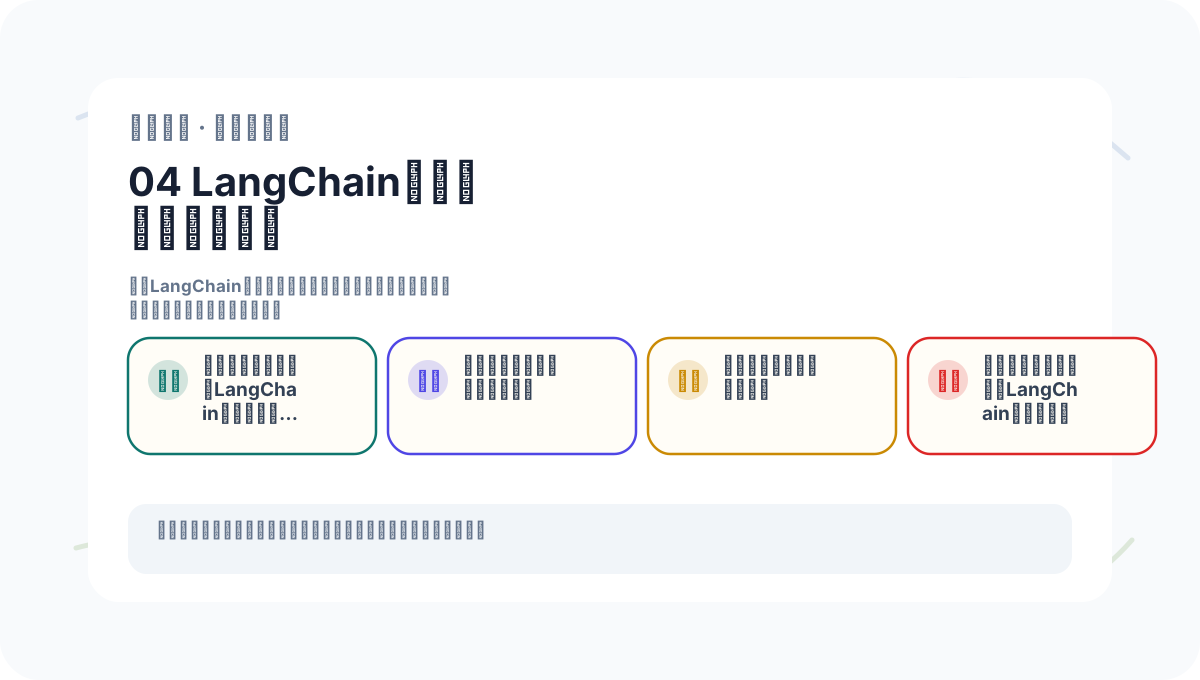
After finishing “LangChain’s Core Concepts”, pick a minimal working example and walk through the full pipeline. Then assess which individual steps you can already implement independently.
Summary
By mastering LangChain’s core concepts—model integration, memory mechanisms, chains, and tool integration—you gain the foundation to build flexible, robust, and intelligent language model applications. These components not only accelerate development but also lay the groundwork for richer, more responsive user experiences.
In the next article, we’ll explore LangChain’s practical application domains—examining how it delivers tangible value in real-world projects. Through concrete case studies and scenario analysis, we’ll uncover the full breadth and potential of LangChain in production environments.
Apply This Lesson
Turn this article into AI software, model, API, and security decisions.
English Article FAQ
Use this article as evidence before choosing AI tools
How should I use this AI Tutorials article?
Use it as the implementation or learning layer, then connect the idea to AI software buyer guides, tool comparisons, benchmarks, API choices, and security checks before making a production decision.
Is this English article different from the Chinese original?
The English edition is localized for global AI readers while preserving the original diagrams, screenshots, prompts, code examples, and source context from the Chinese article.
What should I read after Integrate OpenAI model?
Continue with AI Software Buyer Guides, AI Tools Workbench, Best AI Coding Agents, AI Model Benchmarks, OpenAI vs Anthropic API, or LLM Security Tools depending on the decision you need to make.
Can this article alone choose an AI product or model?
No. Treat the article as evidence and context, then validate fit with pricing, privacy requirements, integration effort, benchmark results, workflow tests, and fallback planning.
Continue