English translation
15 AI Product Management Tutorials: Launch Strategy
AI Article Decision Snapshot
Turn the lesson into workflow, model, budget, and security checks before choosing tools.
Use this quick snapshot before leaving the article. It keeps the next search tied to practical AI software, model/API, cost, privacy, and implementation questions.
Workflow fit
Identify the real job behind the article: coding, research, document review, support, analytics, content, or internal automation.
Model or tool decision
Decide whether the next step is a software shortlist, an AI tool comparison, an API platform choice, or a model benchmark.
Budget and usage signal
Estimate seats, API calls, prompt volume, retries, review time, and fallback work before assuming the workflow is cheap.
Security and privacy review
Check whether source code, customer data, private documents, prompts, logs, or embeddings will enter the AI workflow.
Launching AI features demands greater emphasis on canary releases and monitoring than conventional features. Since model performance is highly sensitive to real-world inputs, it’s best to first observe behavior within a controlled user group before gradually scaling up.
Before launch, prepare at least three critical items: threshold values for key metrics, an accessible channel for reporting anomalies, and a clear plan to disable or degrade functionality if needed. Never roll out fully without a viable rollback strategy.
In the previous article, we explored cross-functional team collaboration practices in the AI product development lifecycle. Effective collaboration forms the bedrock of project success—and today, we dive into product launch strategy, a pivotal phase that ensures your product successfully enters and resonates with the market. Below, we’ll unpack how to design such strategies, illustrated with concrete examples and actionable recommendations.
1. Define Clear Launch Objectives
When crafting a product launch strategy, begin by articulating explicit objectives. Common goals include increasing market awareness, gathering early user feedback, driving sales conversion, or validating core assumptions. Well-defined objectives help align the team and guide tactical decisions.
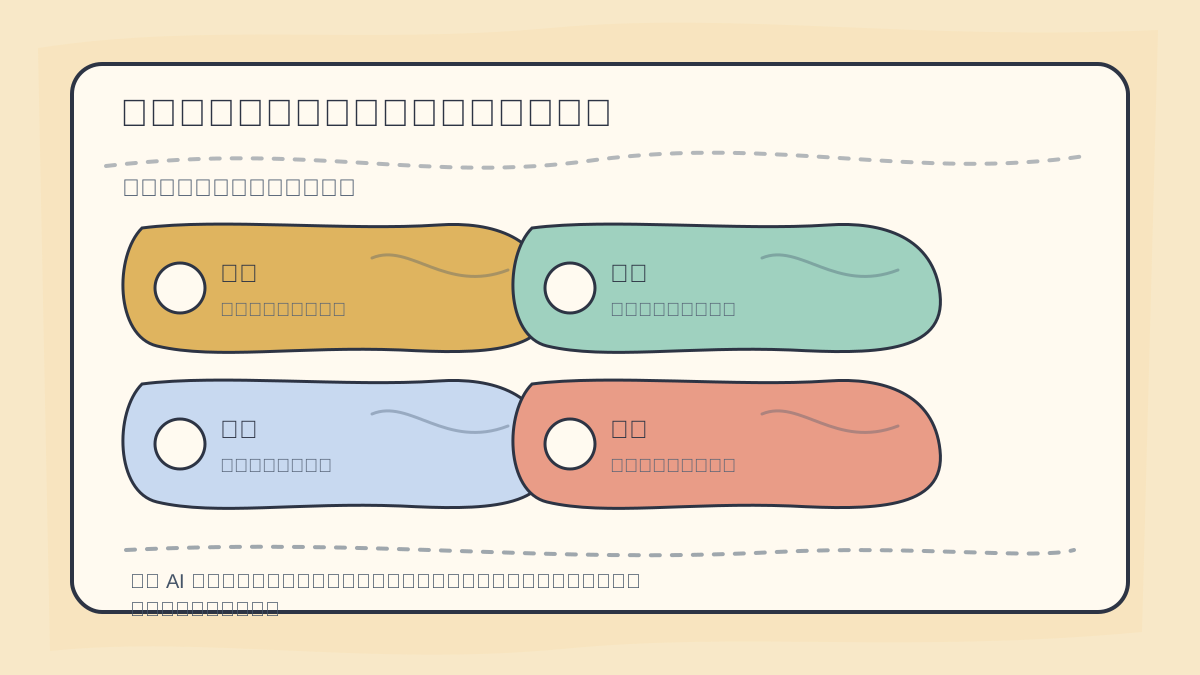
When designing an AI product launch strategy, first assess: target users, canary scope, go/no-go metrics, risk mitigation plans, feedback channels, and rollback procedures.
Case Study: Launching an AI Chatbot
Consider a company launching its AI-powered chatbot. Its stated launch objective was: “Collect at least 1,000 user feedback submissions within the first 30 days post-launch.” This measurable goal not only focused team efforts but also established a baseline for subsequent data analysis and iteration.
2. Select Appropriate Launch Channels
The chosen launch channels directly impact audience reach and engagement. Common options include:
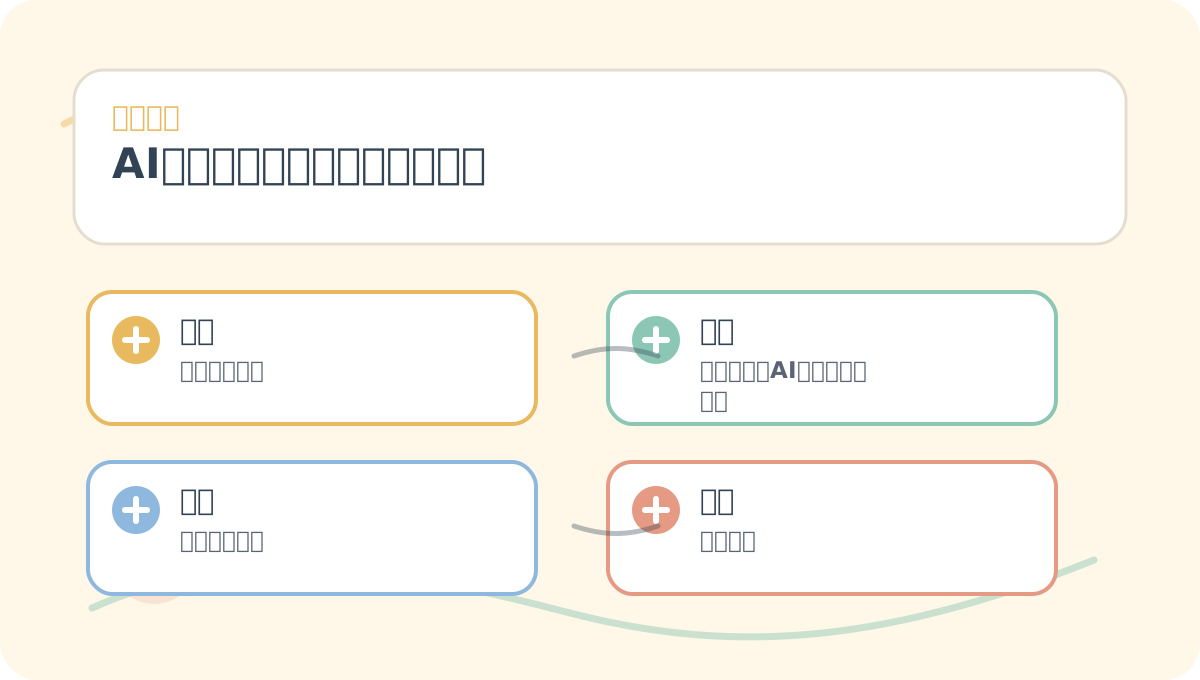
Having reached the end of “AI Product Management Tutorial: Product Launch Strategy,” treat the flowchart in this image as a ready-to-use checklist: Is the problem well-scoped? Are actions concrete and executable? Can the evaluation criteria be reused across future launches?
- Official Website: Publish announcements and comprehensive product documentation.
- Social Media: Leverage platforms like Twitter (X) and LinkedIn for targeted promotion.
- Industry Conferences: Present live demos or host booths to engage high-intent prospects.
- Email Marketing: Send tailored updates, onboarding guides, and feature highlights to opted-in subscribers.
Practical Recommendation
Prioritize channels where your target users are most active and receptive. For instance, if your AI product serves enterprise customers, LinkedIn will likely yield stronger ROI than Facebook.
3. Build a Realistic Timeline
A successful launch hinges on disciplined time management—especially given the interdependencies among engineering, marketing, support, and compliance teams. Develop a detailed timeline covering:
- Pre-Launch Activities: Social media teasers, website updates, internal training, and press kit preparation.
- Go-Live Moment: Choose a timing window aligned with peak user activity and minimal operational risk.
- Post-Launch Follow-Up: Monitor early signals, respond to inquiries, and capture qualitative insights during the critical first two weeks.
Example
For an AI-powered health assistant, the team initiated social media pre-launch campaigns two weeks ahead of launch—and scheduled the official release for Tuesday morning. Data showed Tuesdays consistently delivered the highest user engagement across their target demographic.
4. Release an MVP (Minimum Viable Product)
For AI products, launching an MVP is especially critical. It enables rapid validation with real users—without waiting for full feature completeness—while conserving engineering bandwidth and reducing time-to-insight.
Case Example
An AI language model startup launched a stripped-down conversational interface supporting only basic Q&A. This MVP quickly generated rich usage telemetry and direct user feedback, revealing which capabilities users valued most—and which were low-priority noise.
5. Monitor Performance & Collect Feedback
Post-launch, establish robust mechanisms to monitor system behavior and gather structured feedback. Key indicators include user activation rate, session frequency, task completion rate, sentiment scores, and support ticket volume.
Feedback Collection Tools
- In-App Surveys: Short, contextual questionnaires triggered after key interactions.
- Social Listening Tools: Platforms like Brandwatch or Sprout Social to track unstructured mentions and sentiment.
- Behavioral Analytics: Tools such as Google Analytics, Mixpanel, or custom event-tracking dashboards to quantify usage patterns.
6. Conduct Post-Launch Review & Plan Iteration
Conclude the launch phase with a formal retrospective—reviewing what worked, what didn’t, and why. Emphasize iteration as non-negotiable: use validated learnings, user pain points, and evolving market signals to define the next product cycle.
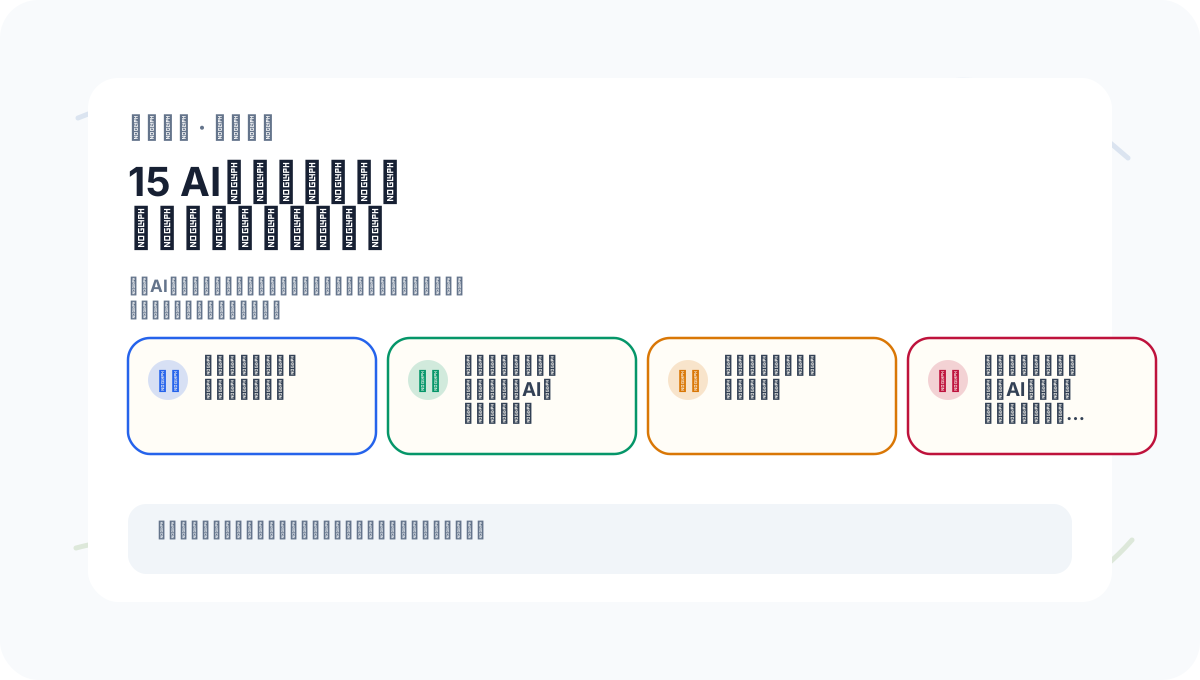
When revisiting “AI Product Management Tutorial: Product Launch Strategy,” avoid over-engineering your first implementation. Start with one simple use case to verify whether the core logic and workflow are clear and actionable.
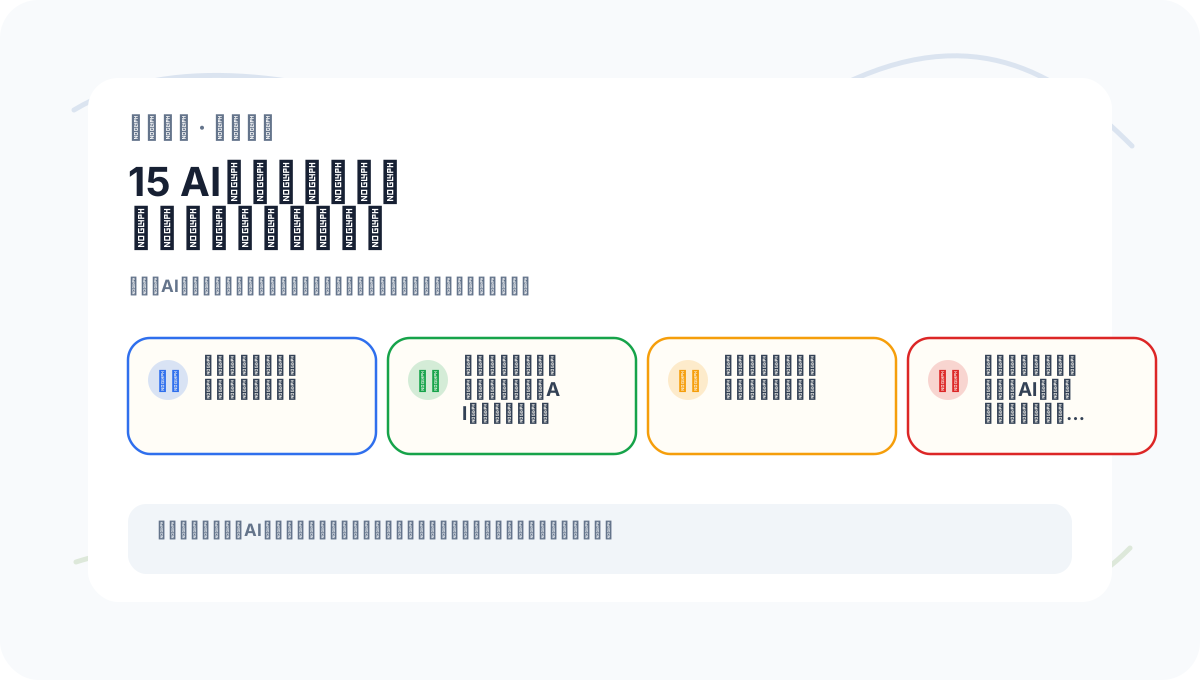
If you haven’t yet fully internalized “AI Product Management Tutorial: Product Launch Strategy,” walk through the four actions on this card step-by-step to reinforce understanding and build confidence.
Summary
A robust AI product launch strategy rests on six interlocking pillars: clearly defined objectives, strategically selected channels, a disciplined timeline, an evidence-driven MVP, continuous monitoring and feedback loops, and intentional post-launch reflection and iteration. Together, these practices empower teams to navigate uncertainty, accelerate learning, elevate user satisfaction, and lay the groundwork for sustainable product growth.
Next, in the following article, we’ll explore “Collecting and Analyzing User Feedback”—delving into proven methods for capturing, synthesizing, and acting upon user insights to fuel continuous product evolution.
Apply This Lesson
Turn this article into AI software, model, API, and security decisions.
English Article FAQ
Use this article as evidence before choosing AI tools
How should I use this AI Tutorials article?
Use it as the implementation or learning layer, then connect the idea to AI software buyer guides, tool comparisons, benchmarks, API choices, and security checks before making a production decision.
Is this English article different from the Chinese original?
The English edition is localized for global AI readers while preserving the original diagrams, screenshots, prompts, code examples, and source context from the Chinese article.
What should I read after 15 AI Product Management Tutorials: Launch Strategy?
Continue with AI Software Buyer Guides, AI Tools Workbench, Best AI Coding Agents, AI Model Benchmarks, OpenAI vs Anthropic API, or LLM Security Tools depending on the decision you need to make.
Can this article alone choose an AI product or model?
No. Treat the article as evidence and context, then validate fit with pricing, privacy requirements, integration effort, benchmark results, workflow tests, and fallback planning.
Continue