English translation
Why AI Matters in Product Management
AI Article Decision Snapshot
Turn the lesson into workflow, model, budget, and security checks before choosing tools.
Use this quick snapshot before leaving the article. It keeps the next search tied to practical AI software, model/API, cost, privacy, and implementation questions.
Workflow fit
Identify the real job behind the article: coding, research, document review, support, analytics, content, or internal automation.
Model or tool decision
Decide whether the next step is a software shortlist, an AI tool comparison, an API platform choice, or a model benchmark.
Budget and usage signal
Estimate seats, API calls, prompt volume, retries, review time, and fallback work before assuming the workflow is cheap.
Security and privacy review
Check whether source code, customer data, private documents, prompts, logs, or embeddings will enter the AI workflow.
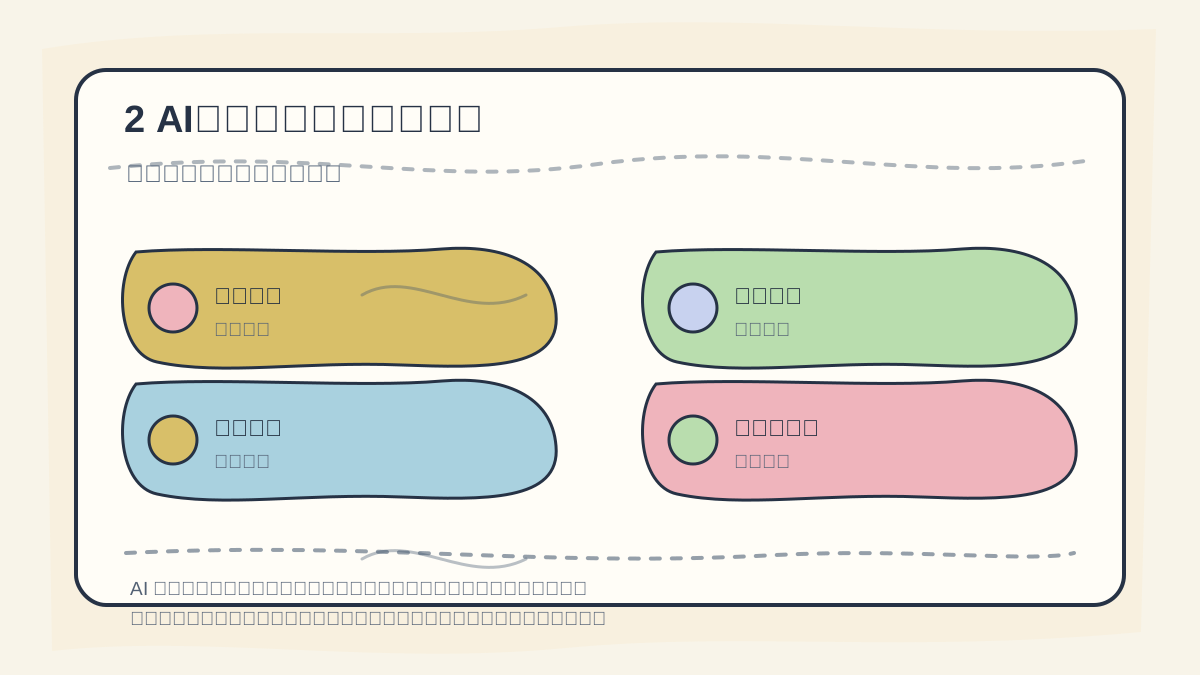
The value of AI in product management goes beyond mere automation—it transforms previously unscalable judgments into observable, testable, and iterative ones. Product managers must first determine whether a given AI application addresses an efficiency problem, an experience problem, or a business problem.
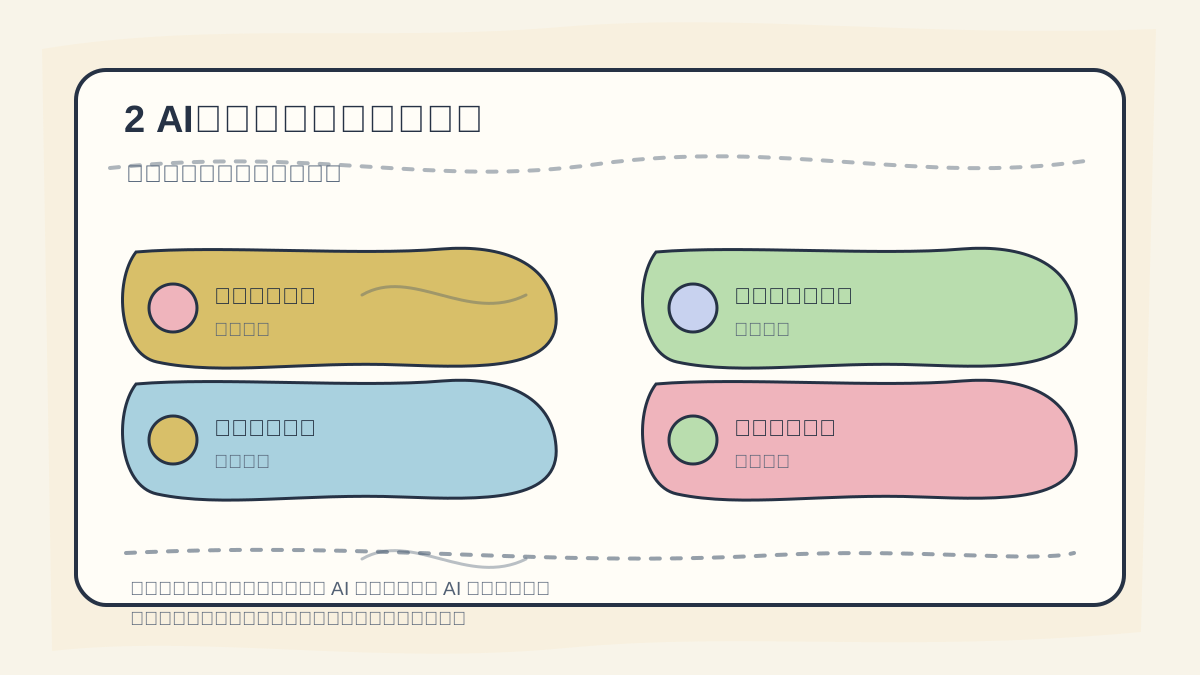
A requirement can be broken down into three columns:
- How it’s handled without AI,
- Where it becomes faster or better with AI, and
- Who steps in to take over if it fails.
Only when all three columns are clearly articulated should the initiative proceed.
In today’s rapidly shifting market environment, businesses face an ever-growing mix of challenges and opportunities. Especially in product management, the integration of AI is gradually reshaping traditional operational practices. As product managers, understanding and mastering this trend has become essential to staying competitive.
The Impact of AI on Product Management
First, AI empowers product managers to understand user needs more deeply. Through data analysis and machine learning, AI efficiently processes and interprets large volumes of user data—revealing preferences and behavioral patterns. For example, e-commerce platforms leverage AI algorithms to analyze users’ purchase histories and deliver personalized product recommendations—enhancing both relevance and user experience.

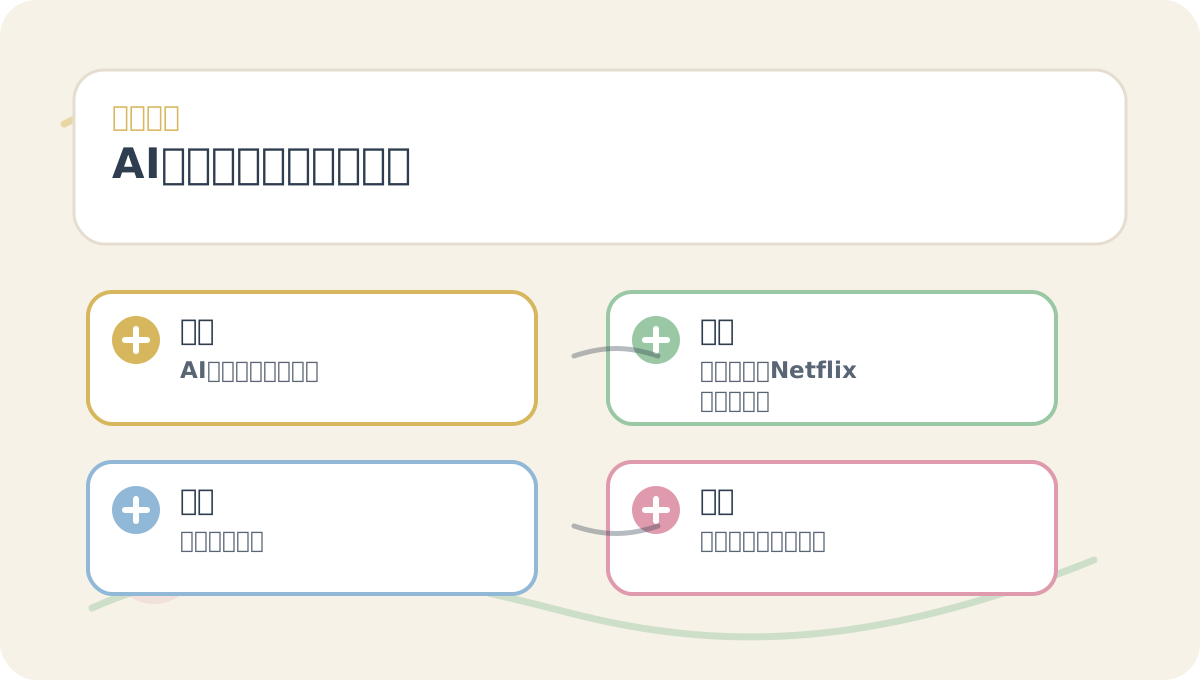
When reading about The Importance of AI in Product Management, break down its value into four dimensions:
- Efficiency gains,
- Experience shifts,
- Data feedback loops, and
- Risk mitigation.
Only capabilities that meaningfully influence decision-making constitute true product value.
Case Study: Netflix’s Recommendation System
Netflix employs sophisticated AI algorithms to analyze users’ viewing history, ratings, and preferences—delivering highly personalized video recommendations. This not only strengthens user retention but also significantly boosts content engagement rates. This case illustrates AI’s immense potential in uncovering user needs and elevating product value.
Enhancing Decision-Making Efficiency
Traditional product decisions often rely heavily on experience and intuition. AI, by contrast, provides robust support for data-driven decision-making. It enables deep analysis of market trends, competitor activity, and user feedback—empowering product managers to formulate more rigorous, evidence-based strategies.
Before diving into the main text of The Importance of AI in Product Management, quickly scan the accompanying visuals:
- What question is each diagram asking?
- Which concepts need clear distinction?
- At which step should you take concrete action?
- And finally—by what criteria will success be measured?
Example: AI-Powered Market Analysis Tools
Product managers can use AI-driven market analytics tools—such as Google Analytics—to monitor user behavior in real time and even forecast shifts in market demand. This forward-looking analytical capability makes decision-making faster, more accurate, and more strategic.
Automating Workflows and Boosting Efficiency
AI also automates many tedious, repetitive tasks in product management. For instance, AI can generate market reports or analyze product usage metrics—reducing time spent on manual analysis. By streamlining workflows, product managers free up valuable time to focus on strategic planning and innovation.
Case Study: Zapier’s Workflow Automation
Zapier is a tool that connects disparate applications, enabling users to build AI-enhanced automated workflows for intelligent information routing. With such automation, product managers reclaim substantial time—redirecting their energy toward product evolution and user feedback.
Preparing for Future Challenges
As explored in the upcoming article Foundations of AI Product Management: Characteristics of AI Products, AI-powered products bring both unique advantages and distinct challenges. Therefore, product managers must go beyond grasping AI’s technical underpinnings—they must deeply understand how AI manifests in practice within product management contexts. Embracing this shift will equip us to navigate future pressures and complexities with greater confidence and agility.

To apply The Importance of AI in Product Management to your own work, start small: isolate and validate just one critical judgment point within a narrowly scoped scenario.
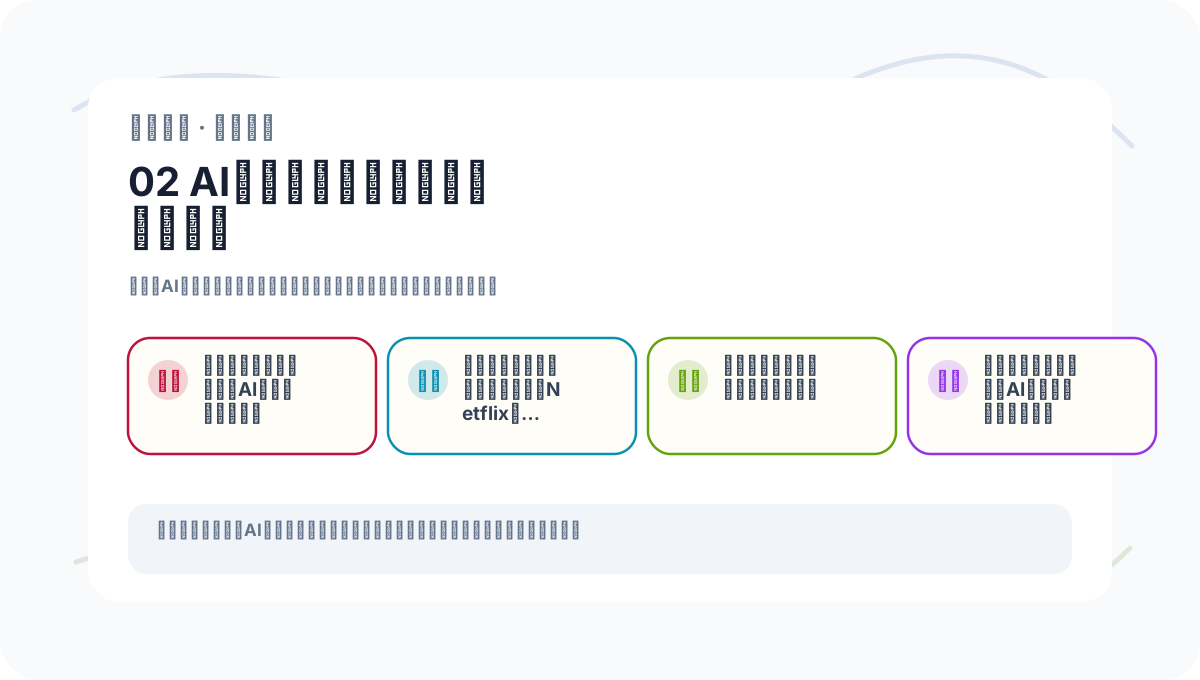
After completing The Importance of AI in Product Management, try adapting it to one of your own real-world scenarios. Pay close attention to whether the input, processing, and output align coherently.
In summary, AI plays an indispensable role in modern product management—whether in deepening user understanding, accelerating decision-making, or automating routine workflows. It continues to drive transformative change across the discipline. In the next module, we’ll delve into the defining characteristics of AI products—equipping product managers with the insights needed to thrive in an AI-augmented future.
Apply This Lesson
Turn this article into AI software, model, API, and security decisions.
English Article FAQ
Use this article as evidence before choosing AI tools
How should I use this AI Tutorials article?
Use it as the implementation or learning layer, then connect the idea to AI software buyer guides, tool comparisons, benchmarks, API choices, and security checks before making a production decision.
Is this English article different from the Chinese original?
The English edition is localized for global AI readers while preserving the original diagrams, screenshots, prompts, code examples, and source context from the Chinese article.
What should I read after Why AI Matters in Product Management?
Continue with AI Software Buyer Guides, AI Tools Workbench, Best AI Coding Agents, AI Model Benchmarks, OpenAI vs Anthropic API, or LLM Security Tools depending on the decision you need to make.
Can this article alone choose an AI product or model?
No. Treat the article as evidence and context, then validate fit with pricing, privacy requirements, integration effort, benchmark results, workflow tests, and fallback planning.
Continue