English translation
9. Product Planning & Strategy: Building an AI Product Roadmap
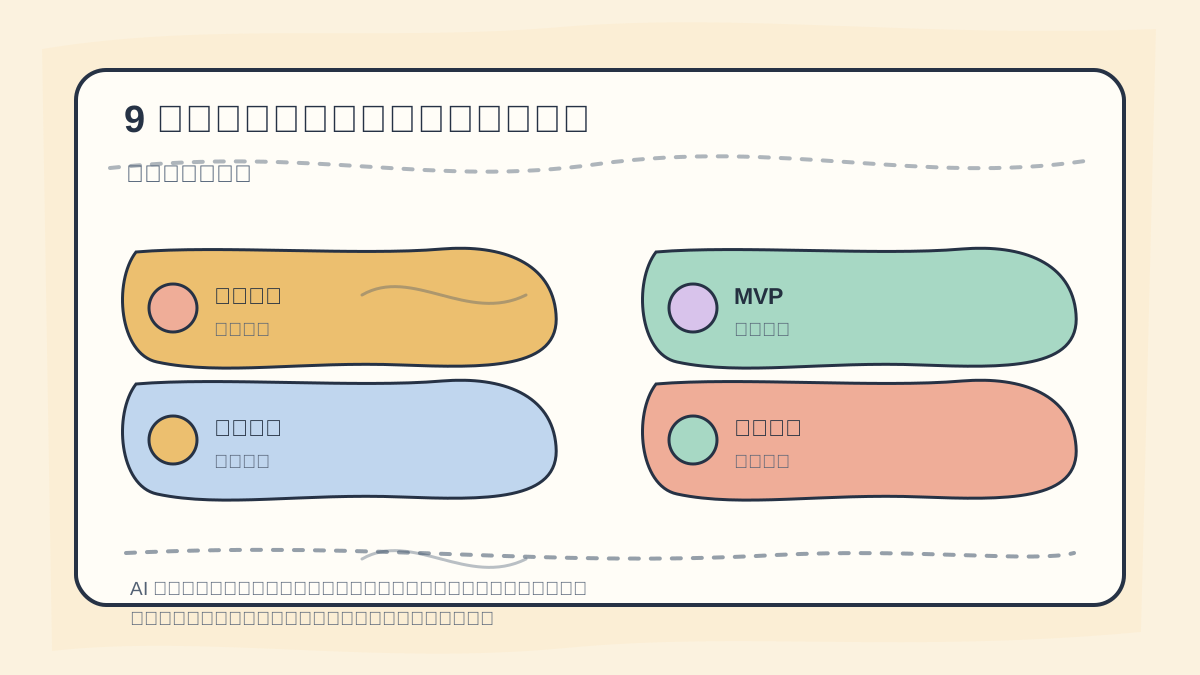
AI Article Decision Snapshot
Turn the lesson into workflow, model, budget, and security checks before choosing tools.
Use this quick snapshot before leaving the article. It keeps the next search tied to practical AI software, model/API, cost, privacy, and implementation questions.
Workflow fit
Identify the real job behind the article: coding, research, document review, support, analytics, content, or internal automation.
Model or tool decision
Decide whether the next step is a software shortlist, an AI tool comparison, an API platform choice, or a model benchmark.
Budget and usage signal
Estimate seats, API calls, prompt volume, retries, review time, and fallback work before assuming the workflow is cheap.
Security and privacy review
Check whether source code, customer data, private documents, prompts, logs, or embeddings will enter the AI workflow.
AI product planning should avoid starting with overly ambitious, all-encompassing capabilities. A more appropriate approach is to begin with a verifiable closed loop: clear inputs, valuable outputs, graceful failure handling, and observable metrics.
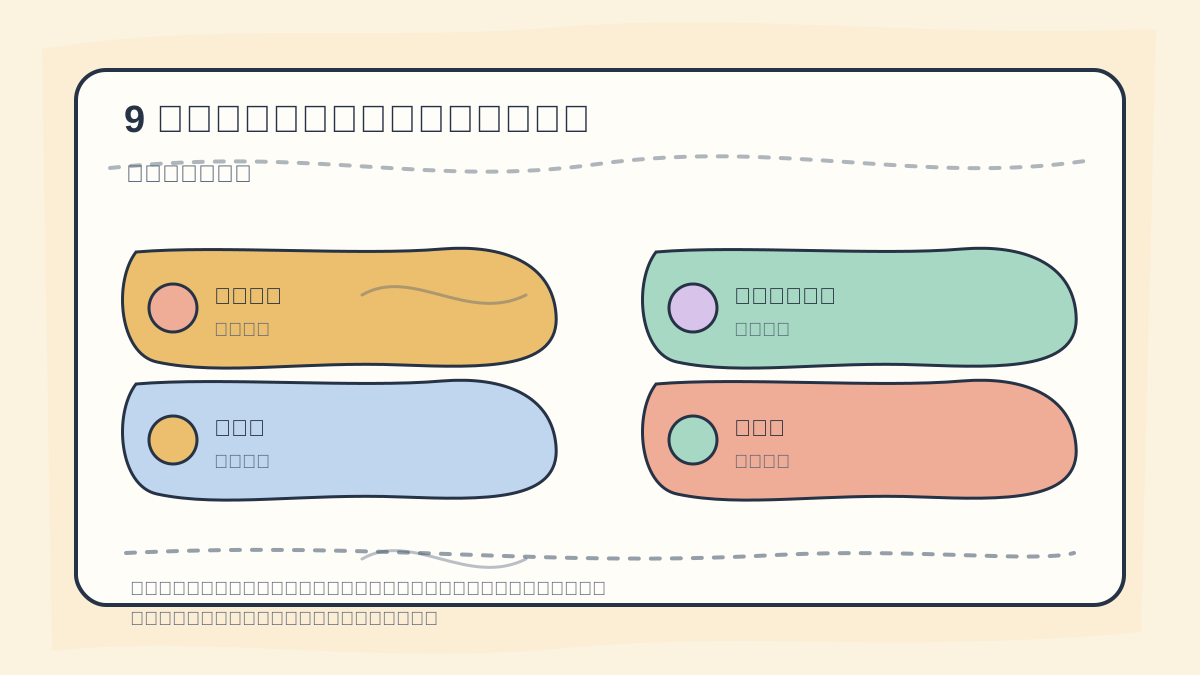
Roadmap sequencing can be prioritized by risk: first validate user value, then model performance, and finally cost efficiency and system stability. Do not defer the hardest risks until right before launch—discover and address them early.
In the previous chapter, we conducted in-depth research on the current market landscape and user needs through “Competitive Analysis and Market Positioning.” We identified competitors’ strengths and weaknesses and clarified target users’ pain points and requirements. This analysis lays the foundation for developing an effective product roadmap. Next, we’ll discuss how to craft a roadmap that is both clear and actionable, enabling us to realize our product vision and strategic goals.
Definition and Importance of a Product Roadmap
A product roadmap is a strategic document that articulates the product’s long-term vision, objectives, and overarching strategy. It not only guides the team’s development efforts but also helps stakeholders understand the product’s future trajectory. A well-structured roadmap typically includes the following elements:
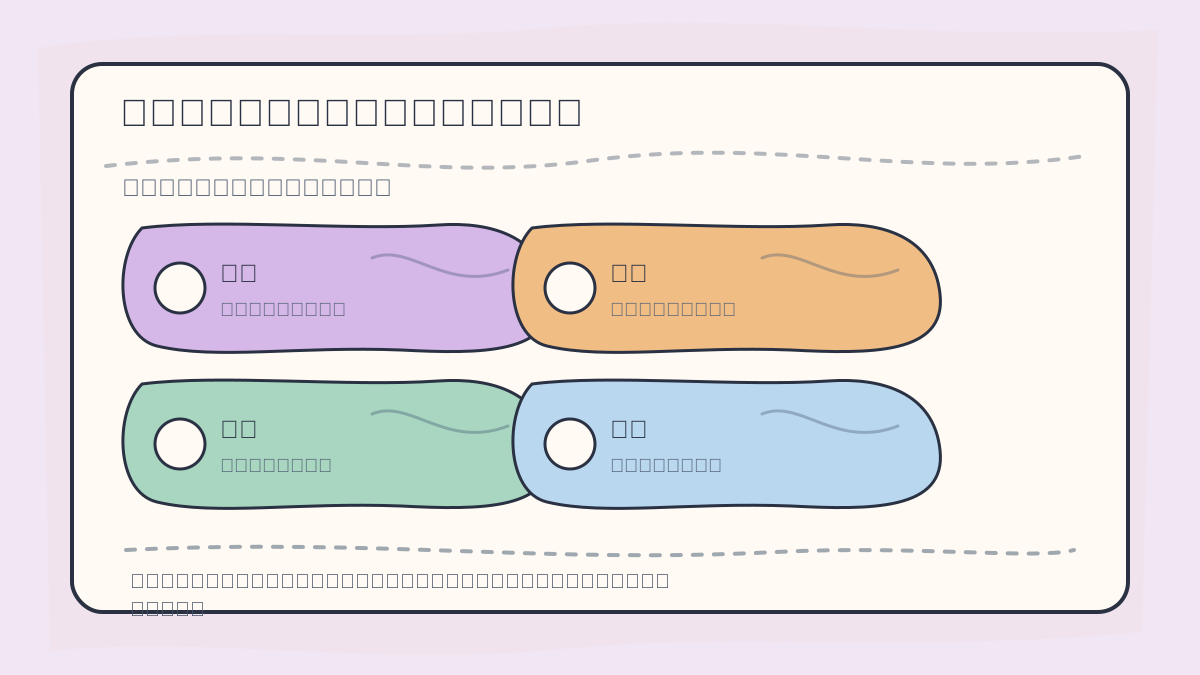
When drafting a product roadmap, explicitly define: business objectives, user value, priority order, release cadence, resource constraints, and validation metrics.
- Vision and Goals: Clearly articulate the product’s purpose and long-term aspirations.
- Timeline: Establish a realistic time horizon to enable focused, incremental progress.
- Prioritization: Rank features based on market demand, user feedback, and technical feasibility.
- Key Milestones: Identify critical checkpoints to track progress and ensure accountability.
How to Develop a Product Roadmap
1. Clarify the Product Vision
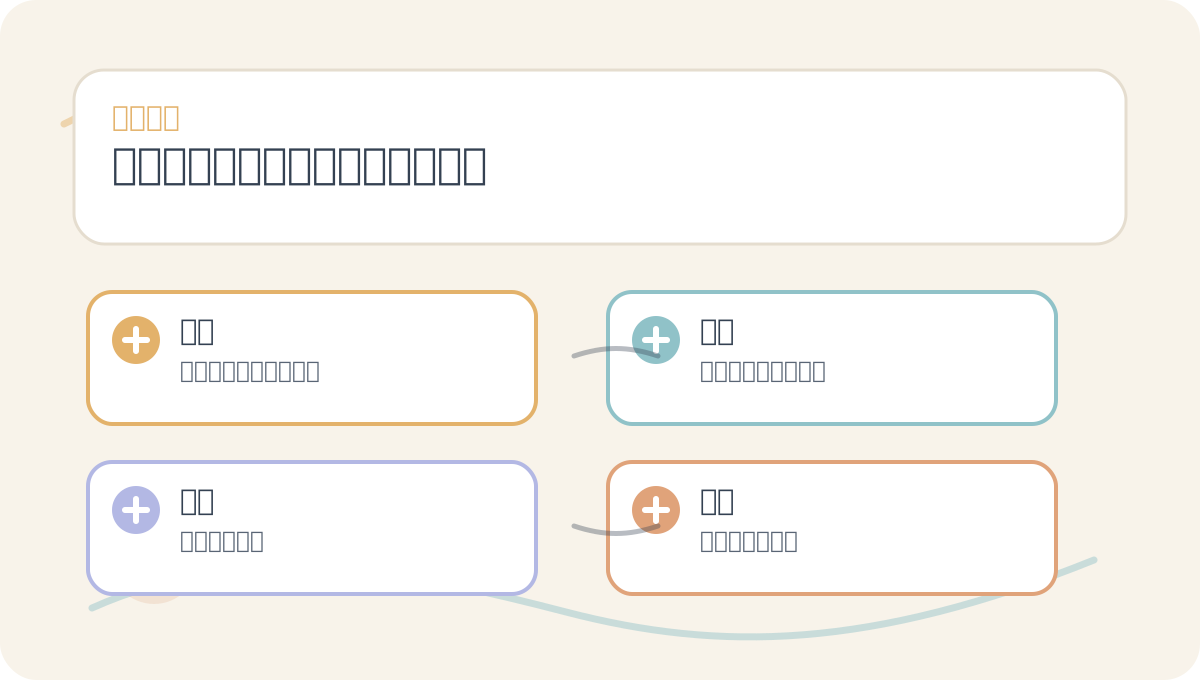
Before reading “Product Planning and Strategy — Developing a Product Roadmap,” first review the visual path shown in the diagram—from problem to outcome. After reading, revisit the diagram to verify whether you can independently replicate the process described.
Before building the roadmap, start by confirming the product’s vision. The vision defines why the product exists—it answers the question: “What problem are we solving?” For example, if your product is a fitness app, its vision might be: “Help users live healthier lives and achieve their fitness goals.”
2. Gather and Evaluate Requirements
Before initiating roadmap work, leverage insights from the prior chapter’s “Market Research and User Needs” analysis to inform prioritization. Use methods such as user interviews, surveys, and A/B testing to collect feedback—and assess which features address users’ most urgent needs.
3. Prioritize Features
A prioritization matrix is an effective tool. You can apply the RICE scoring model (Reach, Impact, Confidence, Effort) to quantitatively evaluate feature importance.
def calculate_rice_score(reach, impact, confidence, effort):
    return (reach * impact * confidence) / effort
Rank features by their RICE scores to help the team focus development efforts on those delivering the highest value.
4. Define the Timeline
Once key features are selected, assign them to a timeline. Consider grouping initiatives into phases: short-term (0–3 months), mid-term (3–6 months), and long-term (6+ months).
5. Define Key Milestones
Each phase should include clearly defined milestones to monitor progress. Examples include:
- MVP (Minimum Viable Product) Launch: Deliver user registration, core functionality display, and initial feedback collection within 3 months.
- First Iteration Release: Within 6 months post-launch, incorporate optimizations based on user feedback and introduce additional social interaction features.
6. Regular Updates and Stakeholder Communication
A product roadmap is not static—it must evolve alongside shifting market conditions and changing user needs. Therefore, teams must regularly revise the roadmap and proactively communicate updates to stakeholders, ensuring alignment across all parties.
Case Study
As an illustrative example, consider a startup’s online education platform. Through preliminary market research and user needs analysis, the team discovered that its primary target users were first-year university students—whose most pressing need was access to video-based courses.
After clarifying the vision, the team decided to roll out the following features in stages:
- Short-term: Launch foundational courses with video playback and comment functionality.
- Mid-term: Introduce interactive Q&A features, informed by user feedback.
- Long-term: Implement personalized learning-path recommendations.
Using the RICE model, the team determined that the short-term video course and commenting features scored highest—so they became the focus of Version 1. Throughout this period, the team conducted regular progress reviews to ensure timely delivery of key milestones.
When reviewing “Product Planning and Strategy — Developing a Product Roadmap,” consolidate key concepts, procedural steps, and tangible outcomes onto a single page for efficient revision.
When practicing “Product Planning and Strategy — Developing a Product Roadmap,” write down input conditions, processing actions, and observable outcomes together—making future review and replication straightforward.
Summary
Developing a successful product roadmap is a cornerstone responsibility of the product manager. It demands synthesis of market analysis, user insights, and realistic assessment of team capacity and resources. By anchoring the roadmap in a compelling vision, grounded timelines, and transparent prioritization, product managers empower their teams to drive meaningful product progress. In the next chapter, we will delve into business model design and value proposition development, providing the strategic foundation for go-to-market execution.
Apply This Lesson
Turn this article into AI software, model, API, and security decisions.
English Article FAQ
Use this article as evidence before choosing AI tools
How should I use this AI Tutorials article?
Use it as the implementation or learning layer, then connect the idea to AI software buyer guides, tool comparisons, benchmarks, API choices, and security checks before making a production decision.
Is this English article different from the Chinese original?
The English edition is localized for global AI readers while preserving the original diagrams, screenshots, prompts, code examples, and source context from the Chinese article.
What should I read after 9. Product Planning & Strategy: Building an AI Product Roadmap?
Continue with AI Software Buyer Guides, AI Tools Workbench, Best AI Coding Agents, AI Model Benchmarks, OpenAI vs Anthropic API, or LLM Security Tools depending on the decision you need to make.
Can this article alone choose an AI product or model?
No. Treat the article as evidence and context, then validate fit with pricing, privacy requirements, integration effort, benchmark results, workflow tests, and fallback planning.
Continue