English translation
15. Data Protection and Security Measures in the Secure Development Lifecycle
AI Article Decision Snapshot
Turn the lesson into workflow, model, budget, and security checks before choosing tools.
Use this quick snapshot before leaving the article. It keeps the next search tied to practical AI software, model/API, cost, privacy, and implementation questions.
Workflow fit
Identify the real job behind the article: coding, research, document review, support, analytics, content, or internal automation.
Model or tool decision
Decide whether the next step is a software shortlist, an AI tool comparison, an API platform choice, or a model benchmark.
Budget and usage signal
Estimate seats, API calls, prompt volume, retries, review time, and fallback work before assuming the workflow is cheap.
Security and privacy review
Check whether source code, customer data, private documents, prompts, logs, or embeddings will enter the AI workflow.
Security Risk Assessment Framework
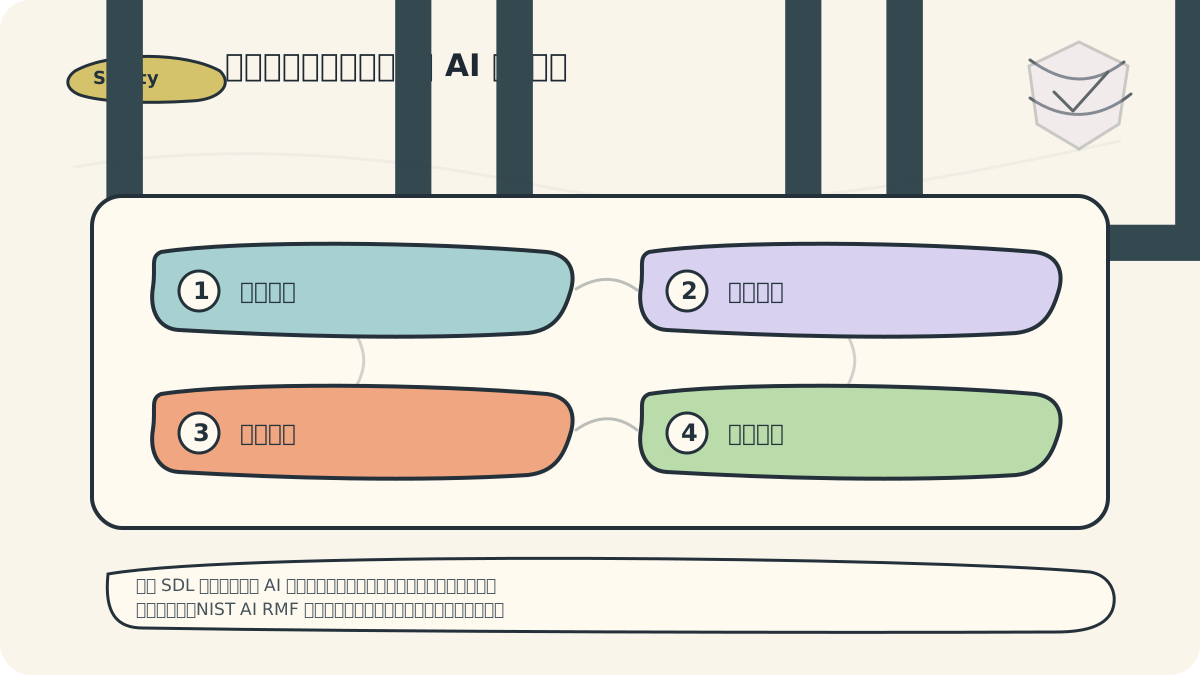
Traditional SDL remains valuable, but AI projects must extend security checks to cover data, models, prompts, knowledge bases, and external tools. The NIST AI Risk Management Framework (AI RMF) similarly emphasizes integrating trustworthiness, transparency, privacy, and security considerations into the design and evaluation of AI systems.
For governance frameworks, refer to the NIST AI Risk Management Framework.
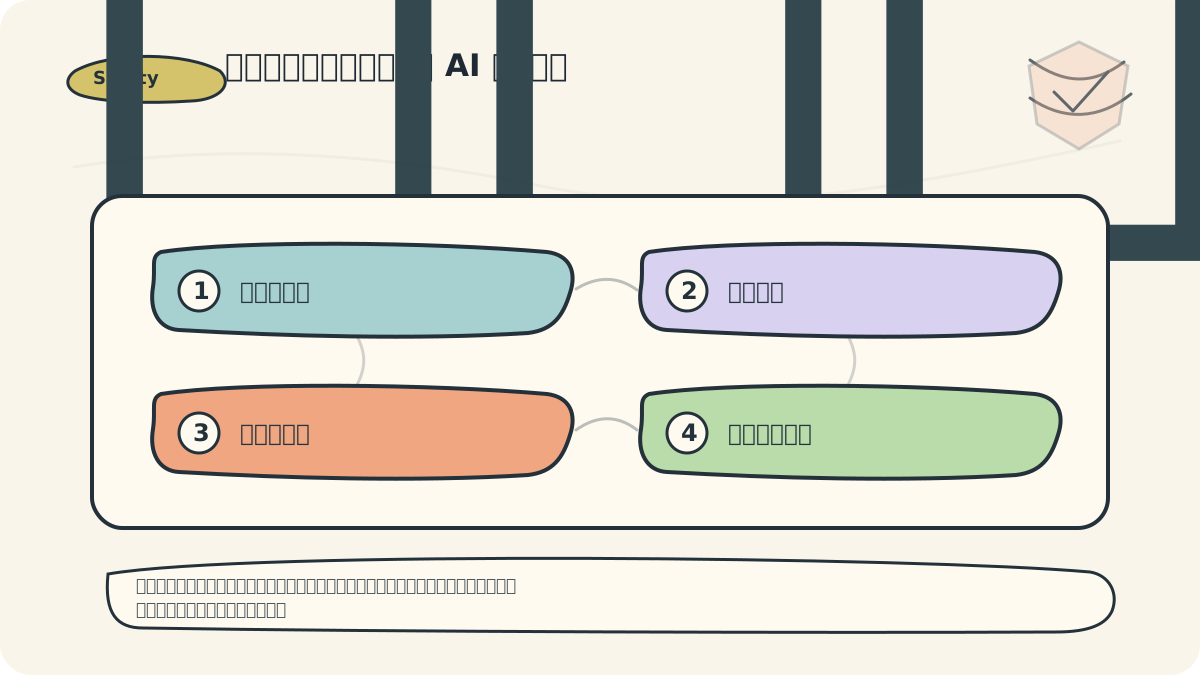
Before each release, I retain four key artifacts: a data flow diagram, an access permissions table, sample red-team test results, and a rollback plan. Security reviews conducted without such evidence are extremely difficult to audit or reproduce.
In today’s highly digitized world, ensuring the security and privacy of artificial intelligence (AI) systems has become critically important. As AI technologies advance rapidly, inadequately protected data and models risk becoming targets for malicious attacks. Therefore, embedding security throughout the entire development process is indispensable. This chapter explores the Secure Development Lifecycle (SDL) and its application to AI security and data protection.
5.3.1 What Is the Secure Development Lifecycle?
The Secure Development Lifecycle (SDL) is a development methodology that integrates security and privacy considerations across all phases of software development—from requirements analysis through design, implementation, testing, and deployment. The goal of SDL is to reduce the likelihood of post-release attacks by institutionalizing standardized security practices.
5.3.2 Key Stages of SDL
The Secure Development Lifecycle comprises several critical stages. Below are the importance and implementation practices for each.
1. Requirements Analysis
During requirements analysis, the development team must explicitly define the system’s security requirements—including data privacy expectations, regulatory compliance obligations, and potential security threats.
Implementation Practices:
- Threat Modeling: Use structured methodologies such as STRIDE or DREAD to categorize and assess potential security threats.
- Compliance Review: Ensure the system adheres to applicable legal and regulatory standards (e.g., GDPR, HIPAA).
2. Design
In the system design phase, security-by-design patterns must be incorporated—ideally through the construction of a “secure architecture” that underpins overall system resilience.
Implementation Practices:
- Apply Security Design Principles: Such as the principle of least privilege and “deny-by-default.”
- Conduct Security Architecture Reviews: Perform periodic architectural evaluations to verify that all security-relevant aspects have been addressed.
3. Implementation
Secure coding practices are essential during development. Vulnerabilities introduced at the code level can lead to data breaches or other security incidents.
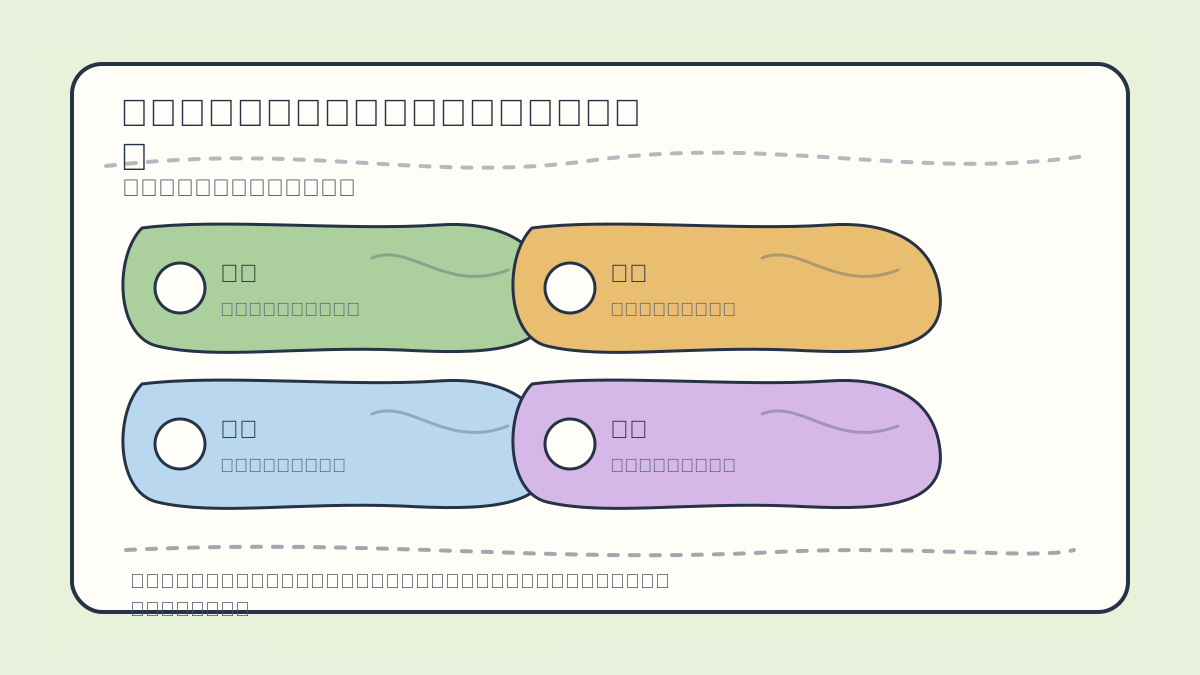
When implementing the Secure Development Lifecycle, first verify coverage across threat modeling in requirements, code review, dependency scanning, testing, release approval, and vulnerability response.
Implementation Practices:
- Enforce Secure Coding Standards and Conduct Code Reviews: Adopt industry-standard secure coding guidelines (e.g., OWASP) and perform regular peer or automated code reviews.
- Use Static Application Security Testing (SAST) Tools: Leverage tools like SonarQube to detect potential security flaws early in the codebase.
Example Code
Below is a simple Python example demonstrating input validation to prevent SQL injection:
import sqlite3

def get_user_data(user_id):
    # Use parameterized queries to prevent SQL injection
    conn = sqlite3.connect('database.db')
    cursor = conn.cursor()

    query = "SELECT * FROM users WHERE id = ?"
    cursor.execute(query, (user_id,))

    return cursor.fetchall()
4. Testing
Security testing is a pivotal stage for validating AI system security. Diverse testing techniques help identify and remediate latent vulnerabilities.
Implementation Practices:
- Penetration Testing: Simulate adversarial behavior to uncover exploitable weaknesses.
- Security Audits: Conduct comprehensive, standards-aligned assessments of the system’s security posture.
5. Deployment and Maintenance
After deployment, continuous security maintenance and monitoring are essential to sustain system integrity. As new threats emerge constantly, systems require ongoing updates and hardening.
Implementation Practices:
- Patch and Update Management: Routinely scan for, validate, and deploy security patches.
- Security Monitoring: Employ security information and event management (SIEM) tools or equivalent platforms to monitor, detect, and respond to security events in real time.
5.3.3 Case Study
Consider a real-world example: A company developed an AI-powered chatbot but did not apply SDL during initial development. After launch, the system suffered a data breach—the attacker exploited insufficient input validation to inject malicious payloads and exfiltrate users’ sensitive information.
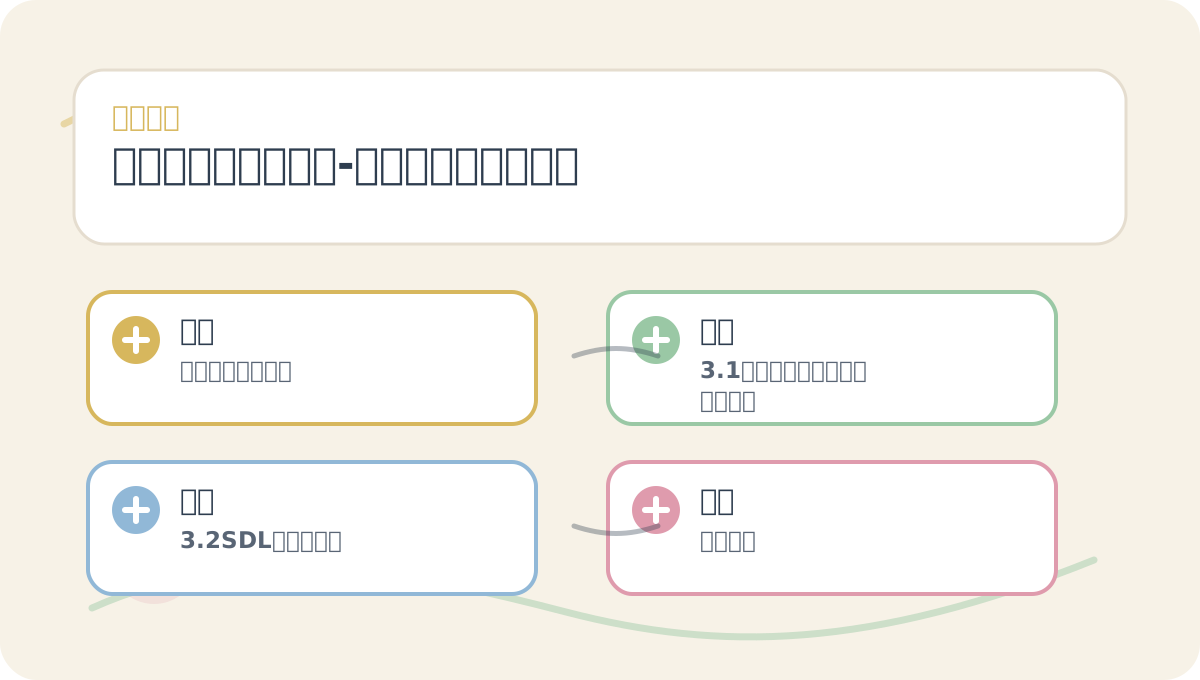
When reading Data Protection and Security Measures — Secure Development Lifecycle, first align the questions, keywords, actions, and acceptance criteria shown in this diagram with the text—this makes reading more efficient. After finishing, try re-explaining the content using your own project as context.
Learning from this incident, the company adopted SDL for subsequent versions. They rigorously applied all the stages described above—and performed dedicated security reviews at each stage. As a result, their AI chatbot achieved significantly stronger resistance to attacks while preserving user data privacy.
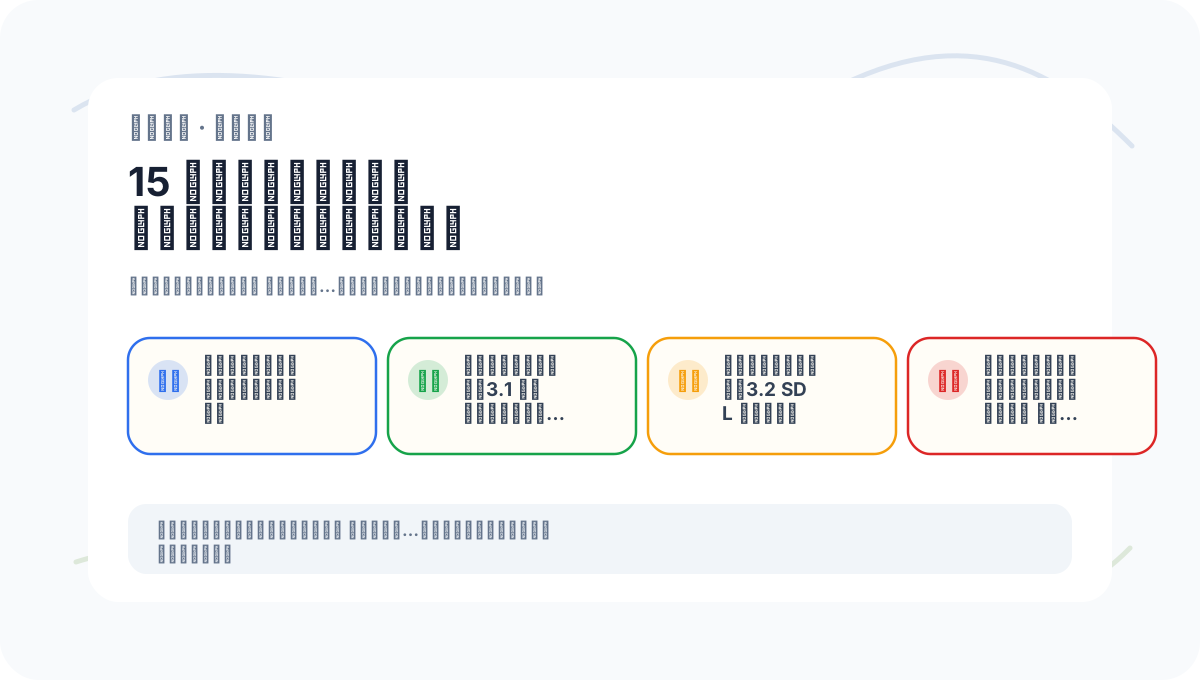
If you haven’t yet fully internalized Data Protection and Security Measures — Secure Development Lifecycle, revisit this card and walk through its four core actions step-by-step.
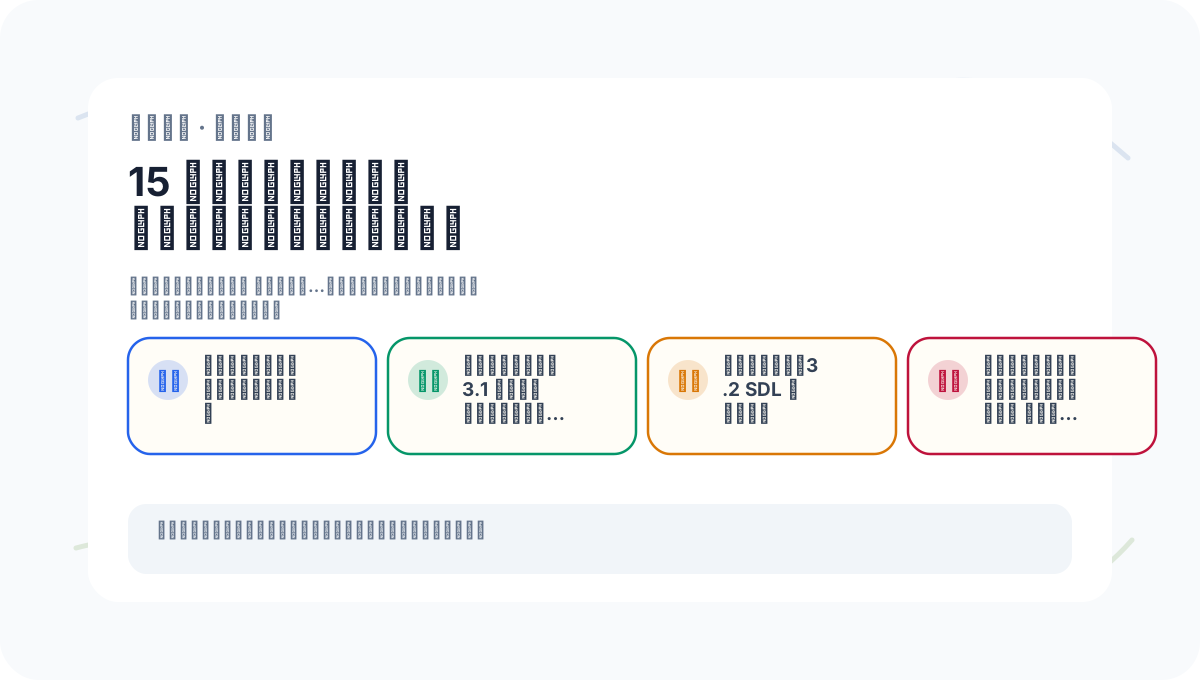
When reviewing Data Protection and Security Measures — Secure Development Lifecycle, avoid attempting large-scale implementation upfront. Instead, start with one simple, concrete example to confirm whether the core workflow is clear and actionable.
5.3.4 Conclusion
The Secure Development Lifecycle is an effective strategy for strengthening data protection and privacy in AI systems. By embedding security into every phase of development, we not only mitigate risks but also foster user trust. In the next section, we will examine ethical challenges and accountability in AI—further exploring the moral principles that must guide AI design and deployment.
Apply This Lesson
Turn this article into AI software, model, API, and security decisions.
English Article FAQ
Use this article as evidence before choosing AI tools
How should I use this AI Tutorials article?
Use it as the implementation or learning layer, then connect the idea to AI software buyer guides, tool comparisons, benchmarks, API choices, and security checks before making a production decision.
Is this English article different from the Chinese original?
The English edition is localized for global AI readers while preserving the original diagrams, screenshots, prompts, code examples, and source context from the Chinese article.
What should I read after 15. Data Protection and Security Measures in the Secure Development Lifecycle?
Continue with AI Software Buyer Guides, AI Tools Workbench, Best AI Coding Agents, AI Model Benchmarks, OpenAI vs Anthropic API, or LLM Security Tools depending on the decision you need to make.
Can this article alone choose an AI product or model?
No. Treat the article as evidence and context, then validate fit with pricing, privacy requirements, integration effort, benchmark results, workflow tests, and fallback planning.
Continue