English translation
Future Outlook and Best Practices for AI Security and Privacy
AI Article Decision Snapshot
Turn the lesson into workflow, model, budget, and security checks before choosing tools.
Use this quick snapshot before leaving the article. It keeps the next search tied to practical AI software, model/API, cost, privacy, and implementation questions.
Workflow fit
Identify the real job behind the article: coding, research, document review, support, analytics, content, or internal automation.
Model or tool decision
Decide whether the next step is a software shortlist, an AI tool comparison, an API platform choice, or a model benchmark.
Budget and usage signal
Estimate seats, API calls, prompt volume, retries, review time, and fallback work before assuming the workflow is cheap.
Security and privacy review
Check whether source code, customer data, private documents, prompts, logs, or embeddings will enter the AI workflow.
Security Risk Assessment Framework
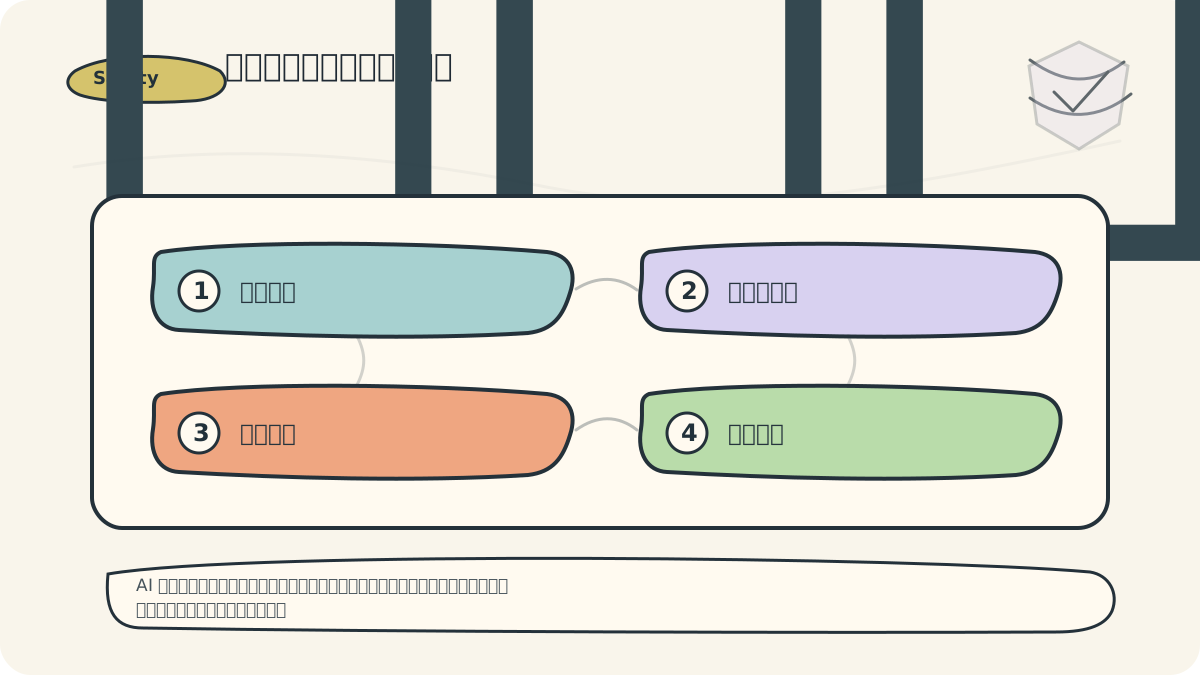
AI security and privacy are not one-time projects. Model capabilities, attack techniques, regulatory requirements, and business scenarios all evolve—so best practices must be embedded into a consistent, recurring rhythm.
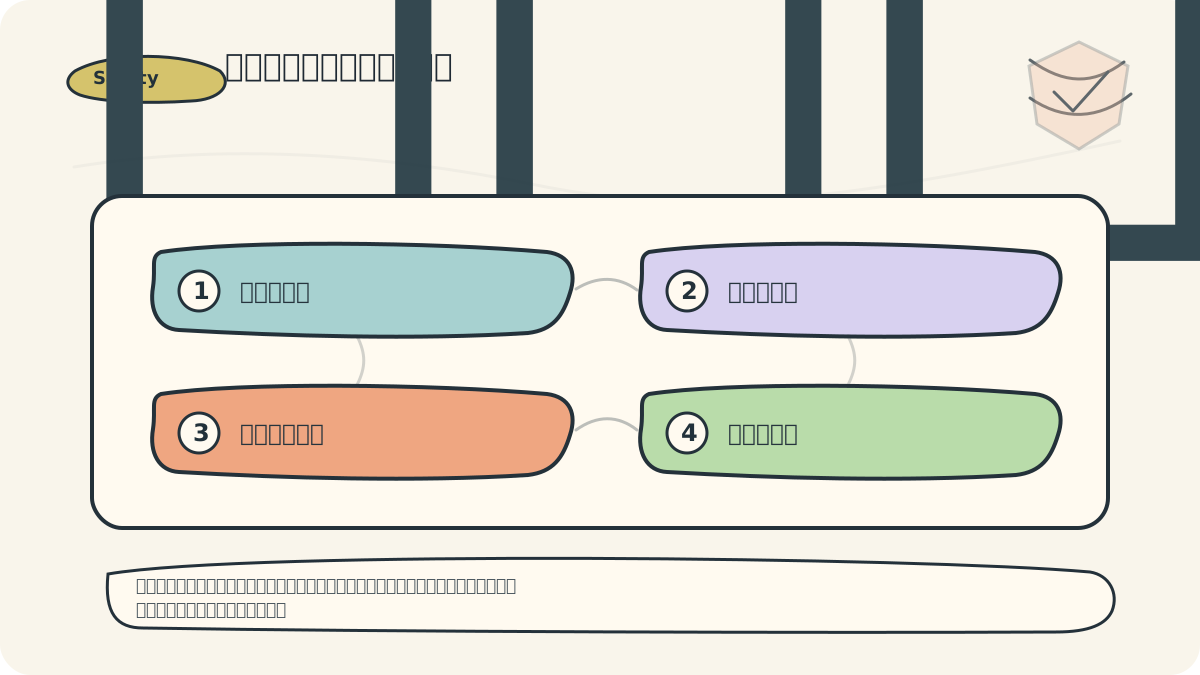
I integrate security and privacy reviews into the release cadence:
- Monthly review of logs and anomalies,
- Quarterly updates to the risk register,
- Full data-flow and permission re-audits with every major release.

When summarizing security and privacy best practices, start by evaluating six core pillars:
- Data minimization,
- Access control,
- Log auditing,
- Risk assessment,
- Incident response, and
- Continuous review.
Having explored ethical considerations and social responsibility, we now turn our attention to the future outlook for artificial intelligence (AI), particularly focusing on emerging technical trends and persistent challenges in security and privacy. As AI technologies advance, so too do the associated risks—and the corresponding best practices must evolve accordingly. Below are key technical trends and current challenges.
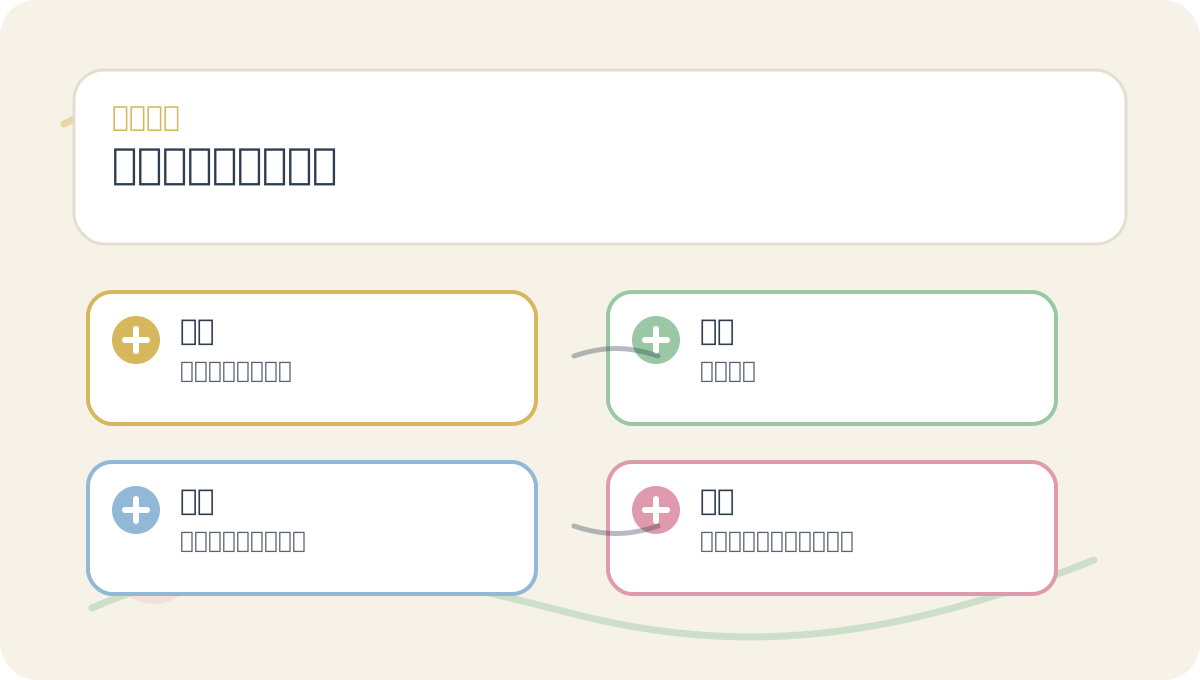
Before reading “Future Outlook and Best Practices,” first align the questions, keywords, actions, and acceptance criteria shown in this diagram. Doing so will make the main text significantly easier to absorb. After reading, try retelling the content using your own project as a concrete example.
Technical Trends
1. Enhanced Privacy-Preserving Technologies
Privacy-preserving technologies have advanced significantly in recent years—especially for data processing and analytics. Techniques such as differential privacy are now widely adopted. Differential privacy introduces calibrated randomness into data analysis, ensuring that individual identities or sensitive attributes cannot be inferred—even when analyzing aggregated datasets.
Example: Apple applies differential privacy in its Search Ads business. This allows the system to learn useful patterns from user behavior while rigorously protecting individual privacy—delivering valuable insights even under strict data constraints.
2. Hashing and Blockchain Applications
To improve data security and transparency, hashing and blockchain technologies are increasingly integrated into AI system data management. Blockchain enables decentralized, tamper-resistant storage, drastically reducing the risk of unauthorized data modification. Meanwhile, cryptographic hashing guarantees data integrity—any alteration to stored data becomes immediately detectable.
Example: On the Ethereum blockchain, multiple initiatives leverage blockchain to ensure AI model transparency and data immutability. Ocean Protocol, for instance, empowers data owners to share datasets securely while maintaining full traceability of how, when, and by whom their data is used.
3. Adaptive Security Models
As AI deployment environments and threat landscapes rapidly shift, static, rule-based security controls are no longer sufficient. The emerging trend is toward adaptive security models: systems that monitor threats in real time and dynamically adjust protective measures. Modern Web Application Firewalls (WAFs), for example, use machine learning to autonomously detect and block novel attack patterns.
Example: Cloudflare’s WAF continuously analyzes traffic patterns—not only from a single customer but across its global network—to identify anomalies in real time. It then automatically updates protection rules to counter newly observed threats.
Key Challenges
Despite promising technological advances, several critical challenges remain.
1. Data Bias and Fairness
As AI systems rely increasingly on large-scale training data, data bias has become a prominent concern. Biased training data inevitably leads to biased model outputs. For instance, recruitment tools trained on historical hiring data may perpetuate systemic inequities—disproportionately disadvantaging certain demographic groups.
2. Complexity and Transparency
The growing complexity of AI models—especially deep learning systems—makes their decision-making processes inherently opaque. Explaining how and why a model reached a specific output remains technically challenging. This lack of interpretability undermines user trust, especially in high-stakes domains involving security and privacy.
3. Regulatory and Compliance Fragmentation
AI regulations vary significantly across jurisdictions. Global organizations must navigate divergent legal frameworks—for example, the EU’s stringent General Data Protection Regulation (GDPR) versus comparatively lighter regimes elsewhere. Balancing compliance with innovation remains a persistent strategic challenge.
4. Balancing Security with High Availability
Ensuring robust security and privacy must not come at the expense of system availability and performance. Overly restrictive safeguards can degrade responsiveness, increase latency, or impair user experience. Achieving optimal security therefore requires careful trade-off analysis and architecture-level design to maintain resilience without sacrificing usability.
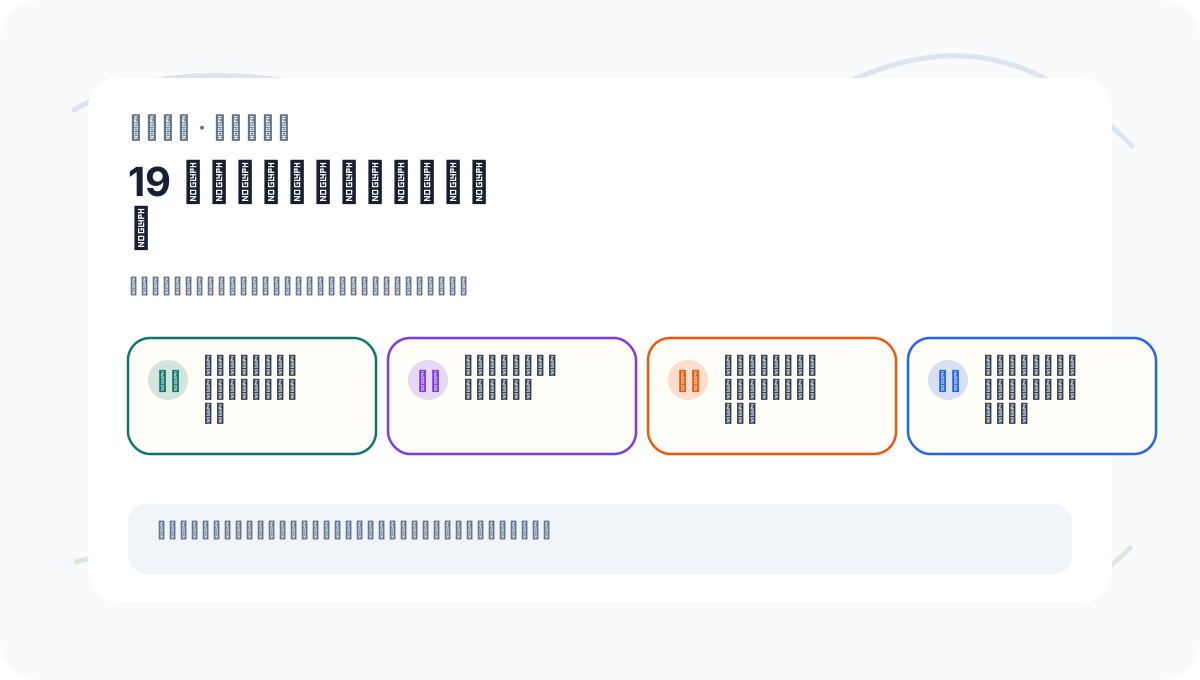
If you haven’t yet fully internalized “Future Outlook and Best Practices,” revisit the four actionable steps outlined on this card to reinforce understanding.
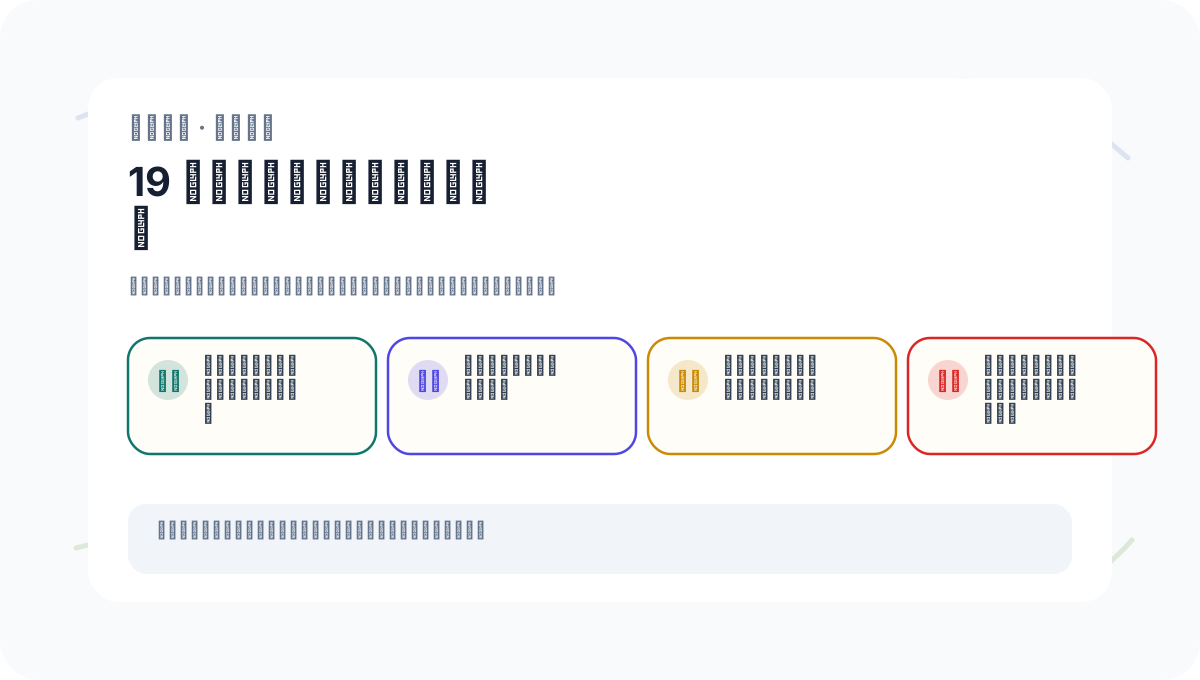
When reviewing “Future Outlook and Best Practices,” avoid launching large-scale initiatives upfront. Instead, begin with a simple, concrete example to verify whether the core logic and workflow are clear and actionable.
Summary
Integrating the ethical and societal discussions from “Ethical Issues and Responsibility” with these evolving technical trends provides essential lenses for navigating AI’s future. Only by jointly addressing technical implementation, ethical accountability, and regulatory compliance can we advance confidently—and responsibly—along the path toward secure, privacy-respecting AI.
In the next chapter, we will explore “The Roles of Government and Industry,” analyzing the distinct responsibilities and obligations of public institutions and private sector actors in safeguarding AI security and privacy.
Apply This Lesson
Turn this article into AI software, model, API, and security decisions.
English Article FAQ
Use this article as evidence before choosing AI tools
How should I use this AI Tutorials article?
Use it as the implementation or learning layer, then connect the idea to AI software buyer guides, tool comparisons, benchmarks, API choices, and security checks before making a production decision.
Is this English article different from the Chinese original?
The English edition is localized for global AI readers while preserving the original diagrams, screenshots, prompts, code examples, and source context from the Chinese article.
What should I read after Future Outlook and Best Practices for AI Security and Privacy?
Continue with AI Software Buyer Guides, AI Tools Workbench, Best AI Coding Agents, AI Model Benchmarks, OpenAI vs Anthropic API, or LLM Security Tools depending on the decision you need to make.
Can this article alone choose an AI product or model?
No. Treat the article as evidence and context, then validate fit with pricing, privacy requirements, integration effort, benchmark results, workflow tests, and fallback planning.
Continue