English translation
DeepSeek Integrated with Knowledge Base: Lightning-Fast Online Inference Achieved
AI Article Decision Snapshot
Turn the lesson into workflow, model, budget, and security checks before choosing tools.
Use this quick snapshot before leaving the article. It keeps the next search tied to practical AI software, model/API, cost, privacy, and implementation questions.
Workflow fit
Identify the real job behind the article: coding, research, document review, support, analytics, content, or internal automation.
Model or tool decision
Decide whether the next step is a software shortlist, an AI tool comparison, an API platform choice, or a model benchmark.
Budget and usage signal
Estimate seats, API calls, prompt volume, retries, review time, and fallback work before assuming the workflow is cheap.
Security and privacy review
Check whether source code, customer data, private documents, prompts, logs, or embeddings will enter the AI workflow.
The effectiveness of a knowledge base rarely hinges solely on the model itself—at least not initially. From my experience, the first things to assess are: Is the documentation clean and well-structured? Is the table of contents clear and logical? Are there excessive redundancies across documents? The more human-readable and handbook-like the source material is organized, the more stable and reliable the model’s responses become.
Before connecting a knowledge base, try manually answering five representative questions using only the raw documents:
- Does explicit evidence exist in the documents?
- Across which specific paragraphs or sections is the answer scattered?
- Does synthesizing the answer require cross-referencing multiple documents?
This quick diagnostic test helps surface segmentation and retrieval issues before deployment—saving far more time than troubleshooting model misbehaviors after going live.
Recently, over 500 readers reached out with a common pain point: DeepSeek’s official web interface frequently displays “Server Busy—Please Try Again Later,” freezing the UI into slideshow-like sluggishness:

Others asked how to empower DeepSeek to manage their own knowledge bases—for example, ingesting the latest financial data or academic papers, then performing intelligent decision analysis. How can this be done efficiently?
This article addresses both challenges head-on. If you’re interested, read on.
1 Solving DeepSeek’s Latency Issues
DeepSeek’s sluggish performance stems from a mismatch between user traffic volume and server resource allocation. Fortunately, DeepSeek is open-source and commercially licensed—so it’s highly likely that large enterprises have already integrated DeepSeek and scaled infrastructure to deliver robust inference capacity. Following this logic, the most practical path to high-performance DeepSeek usage is to identify and leverage third-party platforms that have already deployed it.
Yet today’s landscape offers dozens of such platforms—big and small—making selection overwhelming. Which ones truly deliver? After evaluating ~15 platforms over several days, I identified three particularly reliable options: Tencent Cloud, TianGong AI, and Alibaba Cloud. Below, I detail how to use each—so you won’t waste time hunting independently. Just deploy the DeepSeek-R1 model hosted on these platforms.
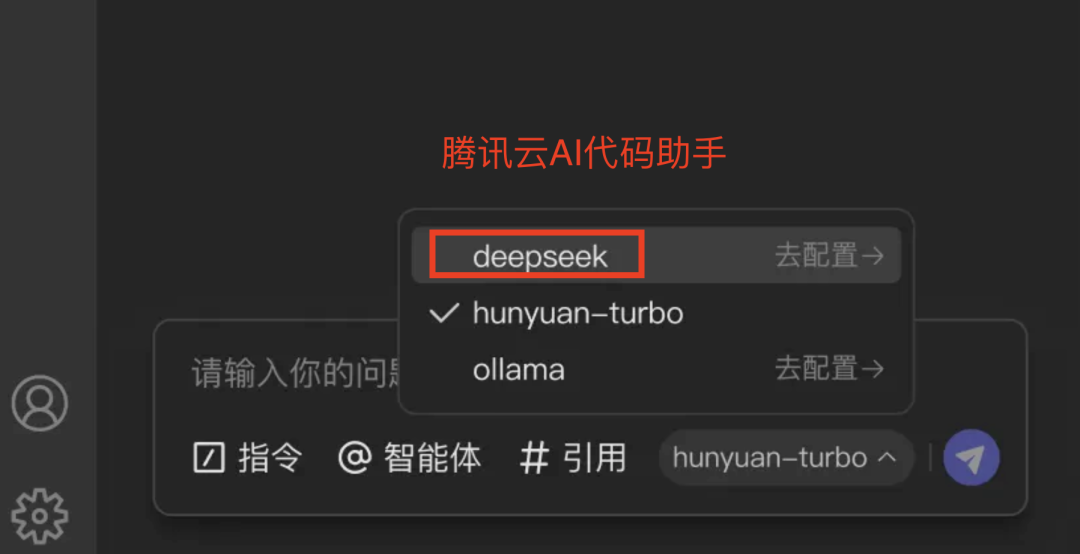
First platform: Tencent Cloud AI Code Assistant DeepSeek is available here—but by default, the Hunyuan (Tencent’s proprietary model) is selected. You must manually switch to DeepSeek-R1. This method has a steeper learning curve and isn’t ideal for most users:
Second platform: TianGong AI Access via PC browser at tiangong.cn. As shown below, “Deep Thinking R1” is explicitly labeled as the DeepSeek-R1 model. Simply check the box and start using it—effortless:

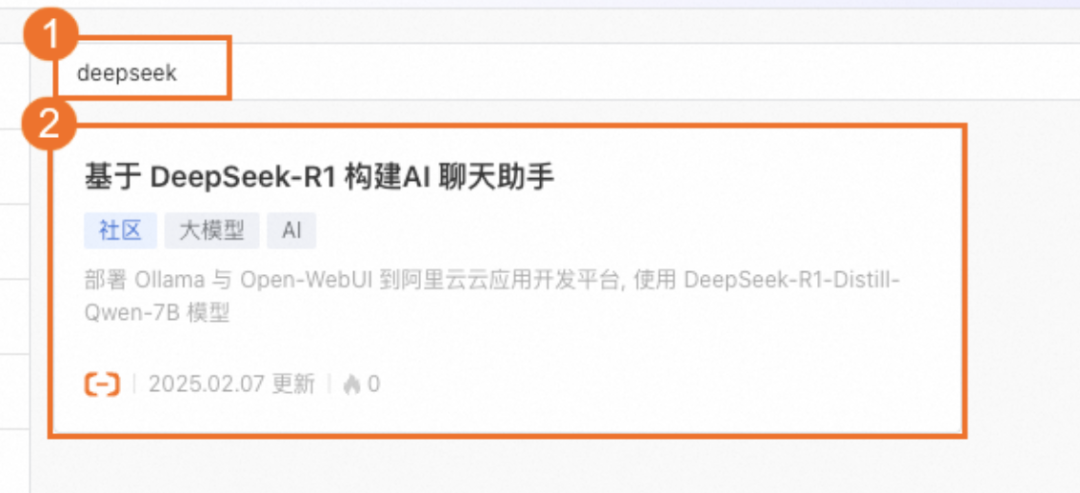
Third platform: Alibaba Cloud Supports large-model development built atop DeepSeek-R1:
Among these, TianGong AI’s DeepSeek-R1 deployment stands out as the most user-friendly:
- Unlimited access to DeepSeek-R1
- Completely free of charge
- Zero latency—smooth, responsive experience
With the first issue resolved, let’s now tackle the second challenge: how to enable DeepSeek to effectively learn from external knowledge.
2 Enabling DeepSeek to Learn from Knowledge Bases
Knowledge bases fall into two categories:
- Local Knowledge Bases: Private, internal documents—e.g., personal notes, corporate intranet materials—that DeepSeek has never been trained on.
- Remote Knowledge Bases: Real-time public information—e.g., breaking news, financial reports, academic preprints—that postdates the model’s training cutoff and thus remains unknown to it.
I’ve previously covered solutions for integrating local knowledge bases (e.g., personal document libraries) in a WeChat Official Account article titled “Integrating DeepSeek with Personal Knowledge Bases”. That guide continues to evolve based on reader feedback. Today, we’ll dive deep into leveraging remote knowledge—specifically, how to equip DeepSeek-R1 with up-to-the-minute external data.
While investigating DeepSeek’s latency issue, I noticed a “Search” button next to the “Deep Thinking R1” toggle on TianGong AI’s interface:
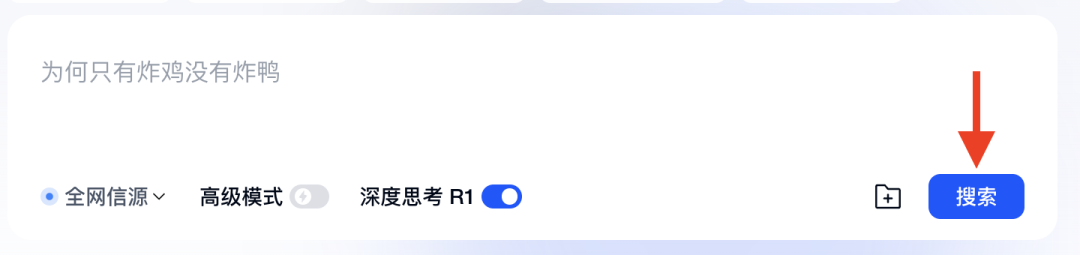
But would “Deep Thinking R1 + Search” actually solve our needs? To find out, I designed two rigorous test scenarios:
- Financial & Stock Analysis: Real-time news retrieval + intelligent decision support
- Academic Paper Synthesis: Deep analysis and summarization of cutting-edge research
Test 1: Summarizing Recent Financial News I prompted: “Summarize recent financial news.” Crucially, I enabled both “Deep Thinking R1” and search. Results shown below:
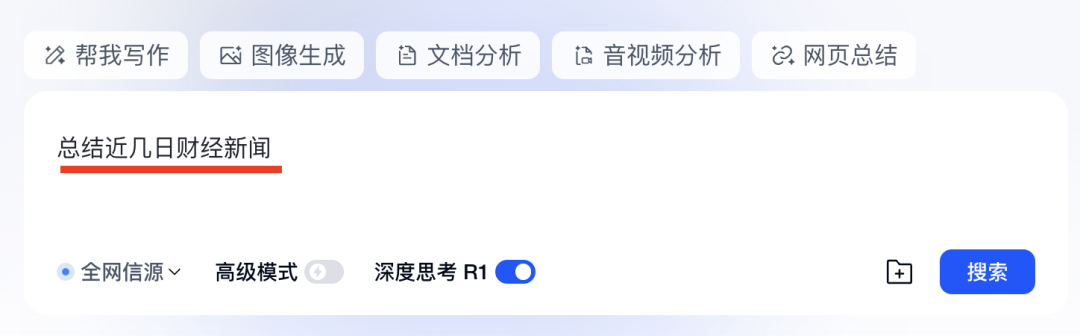
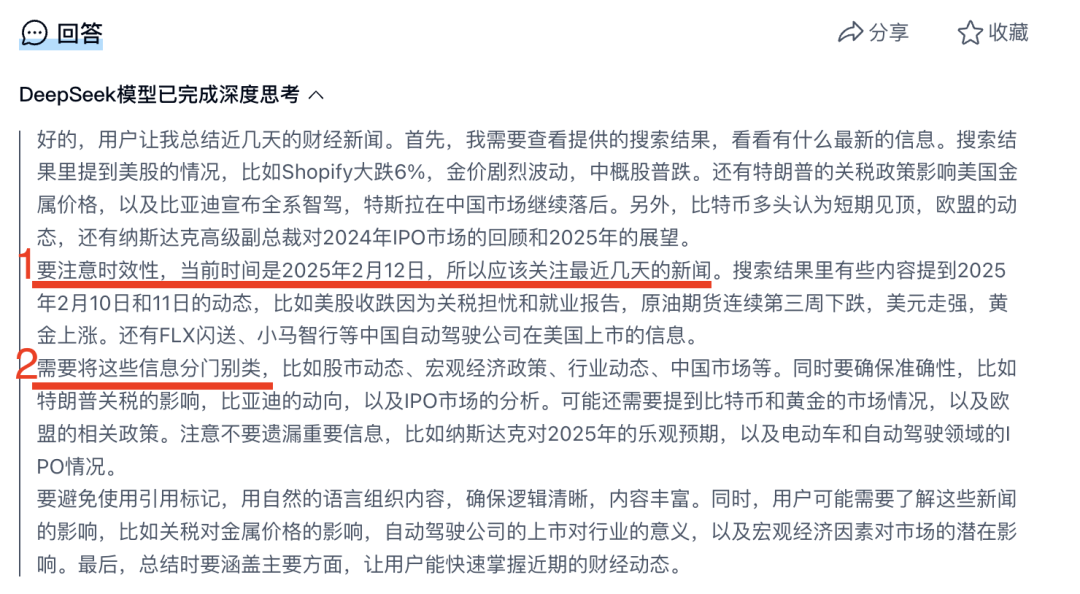
DeepSeek-R1’s “deep thinking” capability leverages Chain-of-Thought (CoT) reasoning—enhanced here by advanced reinforcement learning techniques. Its analysis correctly prioritized timeliness (identifying current date), then structured the summary logically—e.g., categorizing insights into stock market trends, sector developments, etc.:
However, since R1 wasn’t trained on current financial news, high-quality remote data ingestion becomes critical. Even the most powerful model fails without accurate, timely inputs. So—how good are the web pages retrieved by TianGong AI? Here are three representative examples:
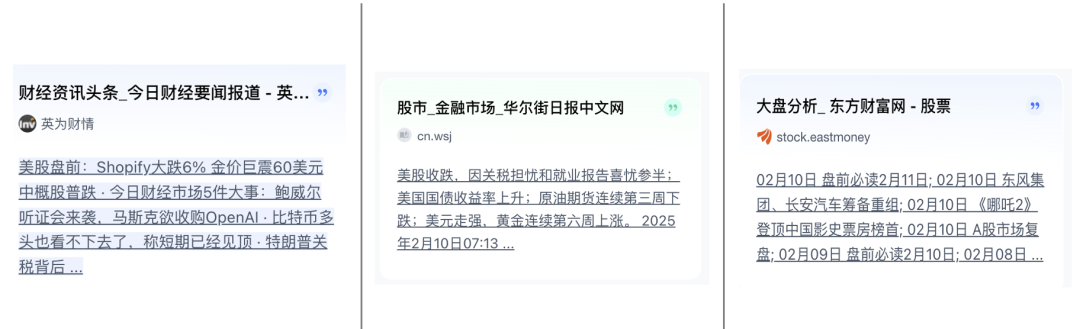
Timing validation confirms freshness: the first page was published just 12 hours ago; the second and third are explicitly dated February 10:

With verified recency, R1 effortlessly categorized and synthesized the content—grouping recent financial news into three coherent themes (shown below). Interested readers can explore details:
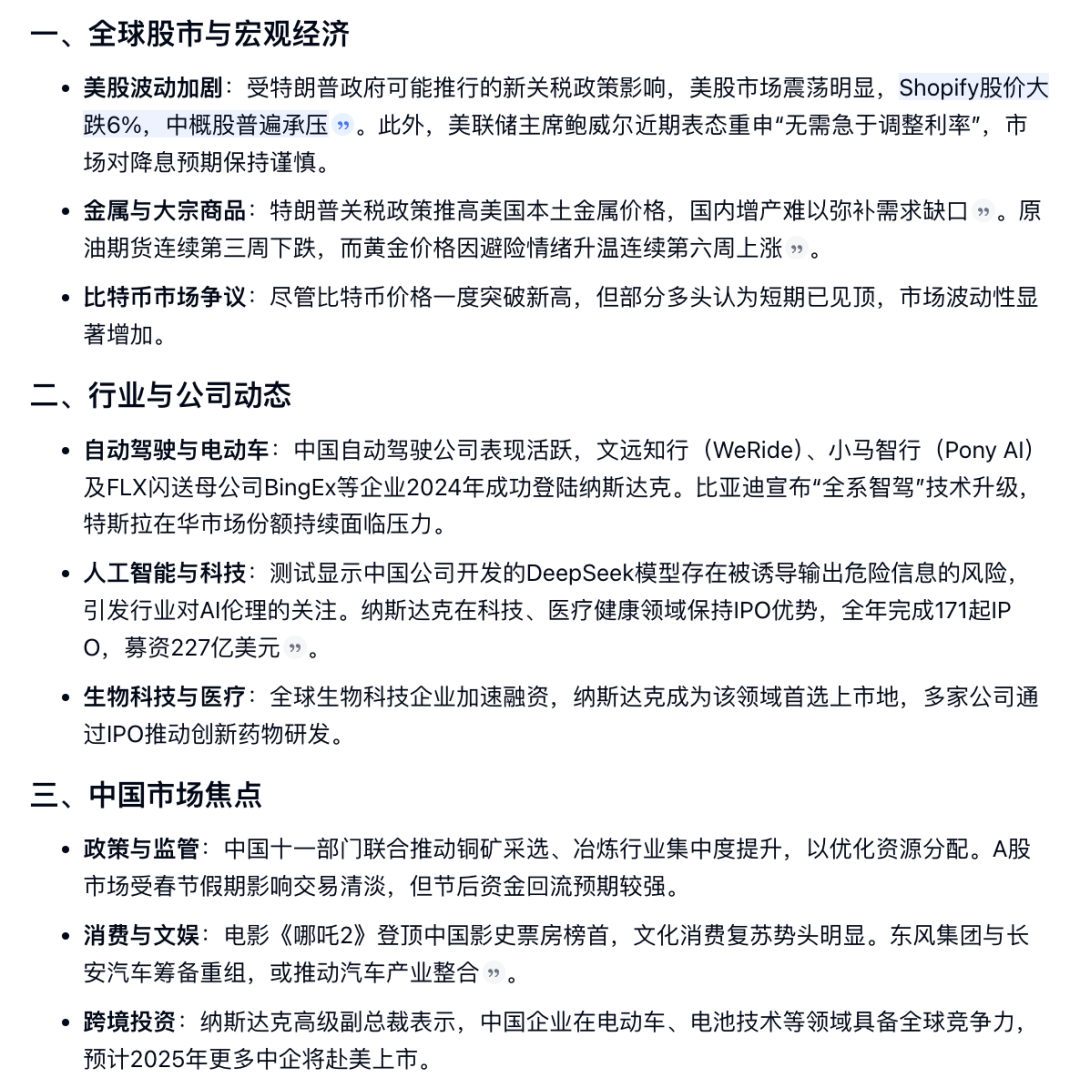
Gone are the days of scanning newspapers or manually aggregating web snippets. Now, typing a few words delivers precise, up-to-date financial intelligence—in seconds.
Test 2: Academic Paper Analysis Next, I tested retrieval and synthesis of technical literature—specifically, the newly released R1-Zero technique, a core innovation behind DeepSeek-R1’s training. Prompt: “Explain R1-Zero.”
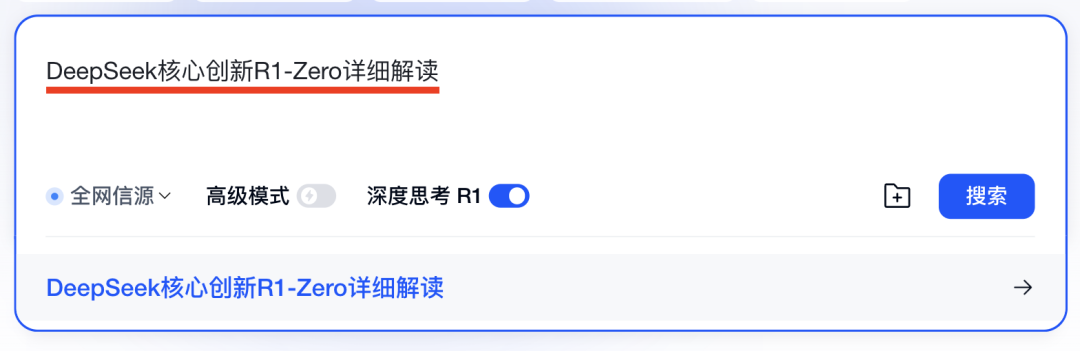
My primary concern was source quality. All cited references were blog-style articles—not peer-reviewed literature. Though the summary hit key points, this falls short: For rigorous analysis, R1 needs direct access to primary sources—academic papers—not secondary commentary.

That’s when I discovered TianGong AI offers not just basic search—but Advanced Search mode, shown below. Let’s test it:
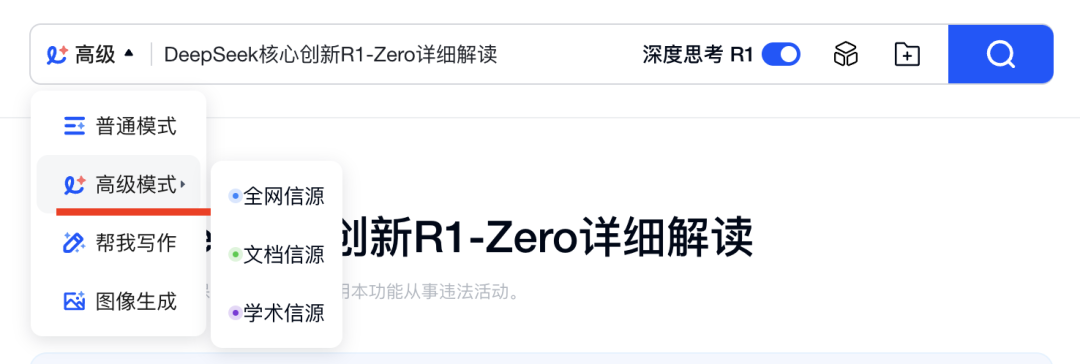
Using Advanced Search, R1 retrieved numerous scholarly papers—including the official DeepSeek-R1 paper itself and five arXiv preprints—all very recent. Note the DeepSeek-R1 paper’s publication date: January 23, 2025:
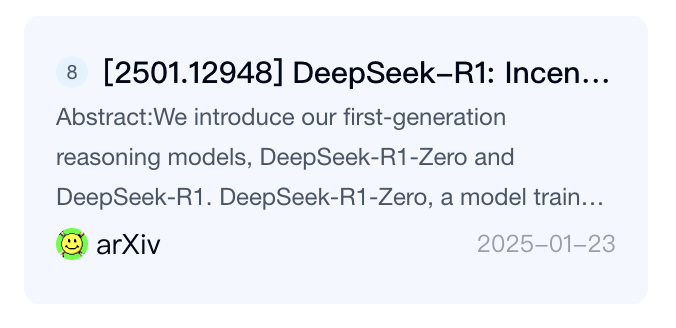
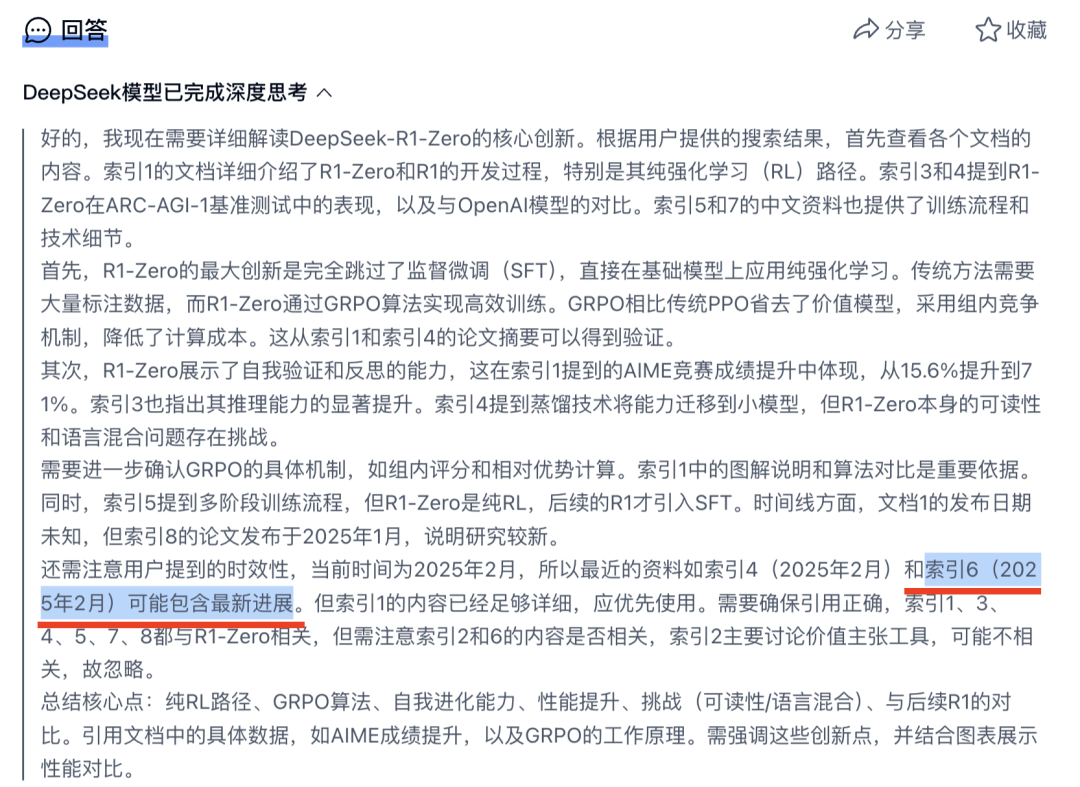
Remarkably, R1 recognized its own paper (Citation #6 above) during reasoning:
Its response was comprehensive—textual analysis plus embedded figures from the paper. Below are excerpts from the beginning and end:
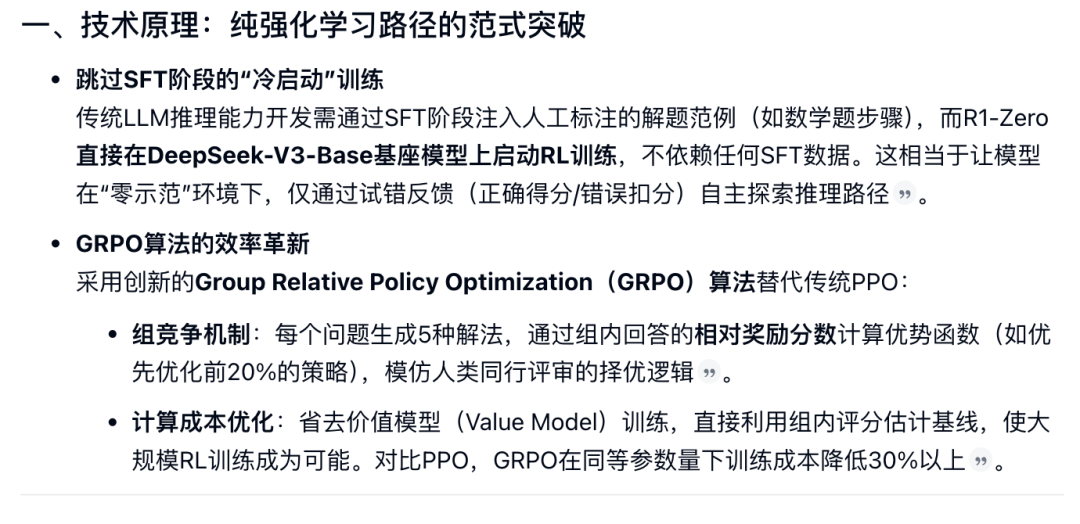
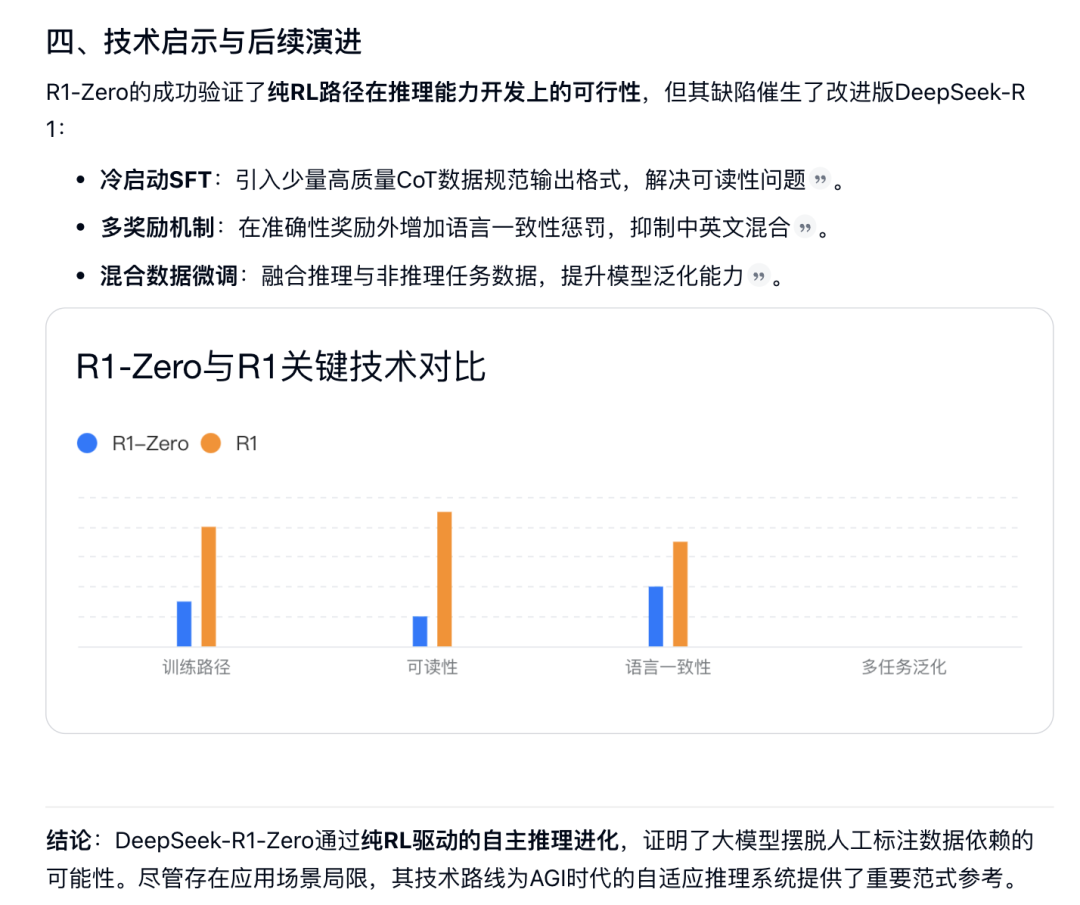
DeepSeek-R1’s strong reasoning engine enables real-time absorption and synthesis—even of massive, unfamiliar remote knowledge—without requiring retraining.
3 DeepSeek-R1 + TianGong AI Search: A Powerful Synergy
These tests confirm TianGong AI integrates high-quality financial and academic databases, enabling DeepSeek-R1 to manage remote knowledge bases effectively.
Specifically:
- Financial Data: Aggregates from global authoritative sources—real-time earnings reports, analyst research, and corporate disclosures—ensuring accuracy and timeliness.
- Academic Resources: Covers multidisciplinary arXiv preprints with high retrieval precision. Combined with R1’s reasoning, it delivers professional-grade paper analysis and management.
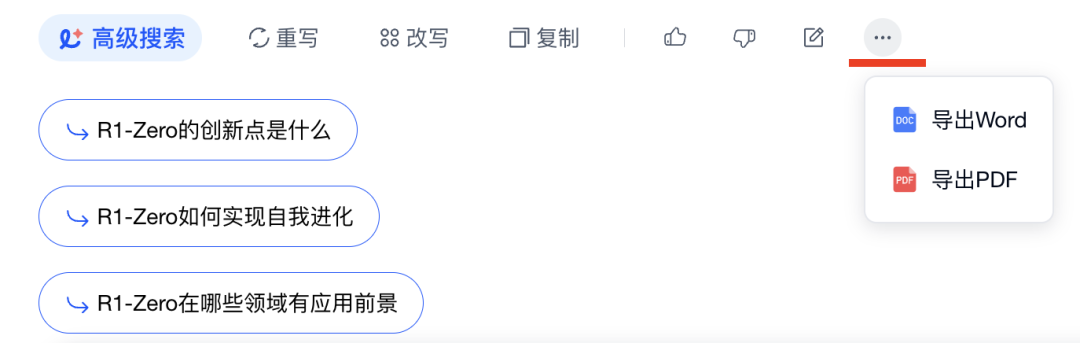
Most importantly, all outputs support one-click export to Word or PDF—no manual Markdown conversion or copy-pasting required. A huge time-saver!
Final Summary This article resolves two top reader concerns:
- Latency: Use TianGong AI’s DeepSeek-R1 deployment—zero lag, unlimited access, free.
- Remote Knowledge Integration: Leverage TianGong AI’s Advanced Search + DeepSeek-R1 for precise, deep, and expert-level analysis of real-time external data.
- Cost & Accessibility: Both solutions are completely free and unrestricted.
Apply This Lesson
Turn this article into AI software, model, API, and security decisions.
English Article FAQ
Use this article as evidence before choosing AI tools
How should I use this AI Tutorials article?
Use it as the implementation or learning layer, then connect the idea to AI software buyer guides, tool comparisons, benchmarks, API choices, and security checks before making a production decision.
Is this English article different from the Chinese original?
The English edition is localized for global AI readers while preserving the original diagrams, screenshots, prompts, code examples, and source context from the Chinese article.
What should I read after DeepSeek Integrated with Knowledge Base: Lightning-Fast Online Inference Achieved?
Continue with AI Software Buyer Guides, AI Tools Workbench, Best AI Coding Agents, AI Model Benchmarks, OpenAI vs Anthropic API, or LLM Security Tools depending on the decision you need to make.
Can this article alone choose an AI product or model?
No. Treat the article as evidence and context, then validate fit with pricing, privacy requirements, integration effort, benchmark results, workflow tests, and fallback planning.
Continue