English translation
Lobster Workflow: Building Multi-Step, Approval-Enabled Pipelines
AI Article Decision Snapshot
Turn the lesson into workflow, model, budget, and security checks before choosing tools.
Use this quick snapshot before leaving the article. It keeps the next search tied to practical AI software, model/API, cost, privacy, and implementation questions.
Workflow fit
Identify the real job behind the article: coding, research, document review, support, analytics, content, or internal automation.
Model or tool decision
Decide whether the next step is a software shortlist, an AI tool comparison, an API platform choice, or a model benchmark.
Budget and usage signal
Estimate seats, API calls, prompt volume, retries, review time, and fallback work before assuming the workflow is cheap.
Security and privacy review
Check whether source code, customer data, private documents, prompts, logs, or embeddings will enter the AI workflow.
OpenClaw features a pivotal concept called Lobster—think of it as a “workflow shell”: it organizes multi-step tool invocations into a deterministic sequence, inserting human approval points at critical junctures.
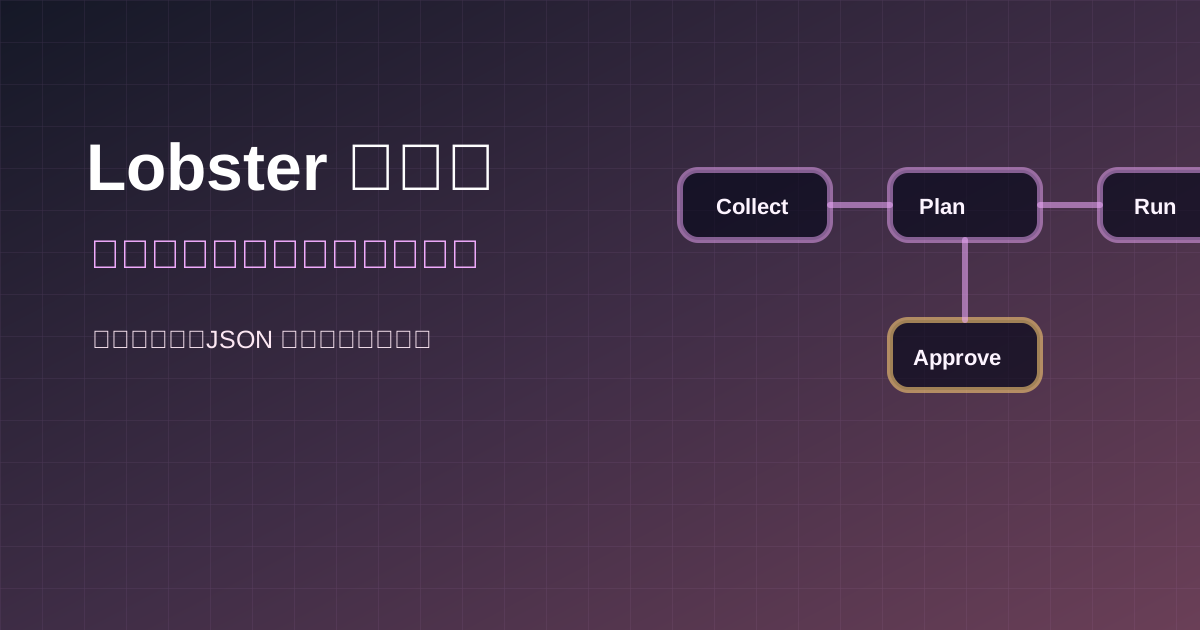
Lobster workflows excel at transforming multi-step tasks into auditable, approval-governed pipelines. They are not designed for full automation; rather, they make explicit when each step runs automatically—and when it must pause for human review.
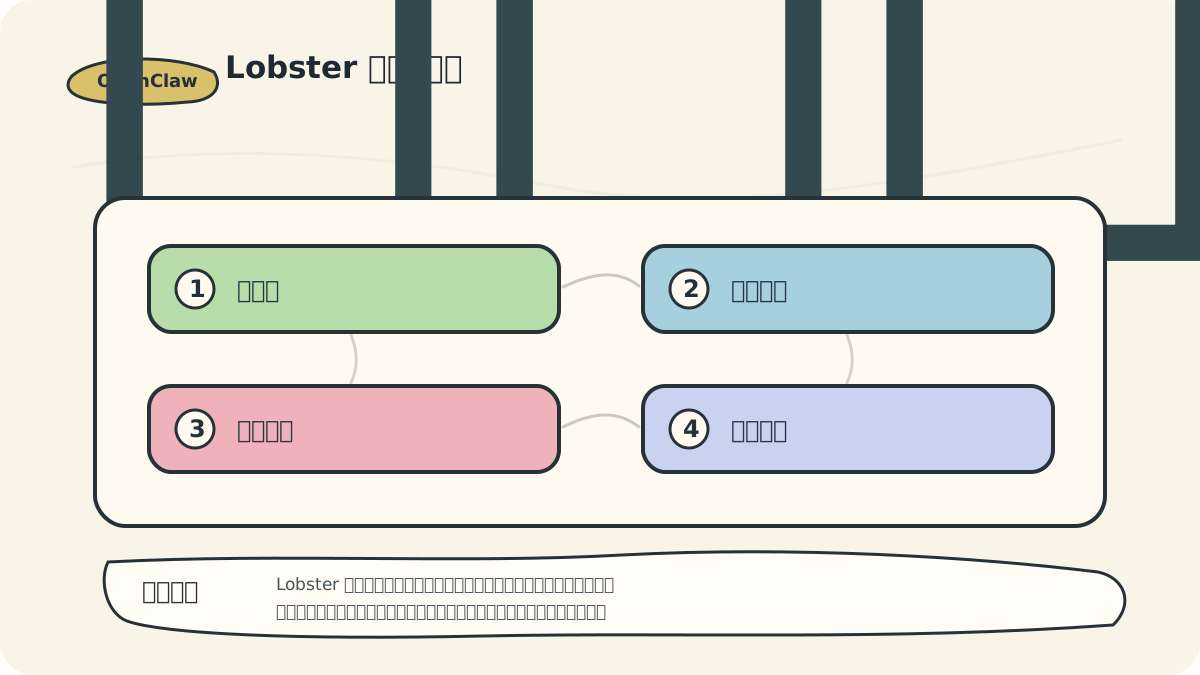
We’ll begin with a concrete task: blog post publishing checks—verifying title, links, images, and build status—then generating only recommendations, not publishing directly. Once the workflow stabilizes, we can later extend it to include a confirmed publishing action.
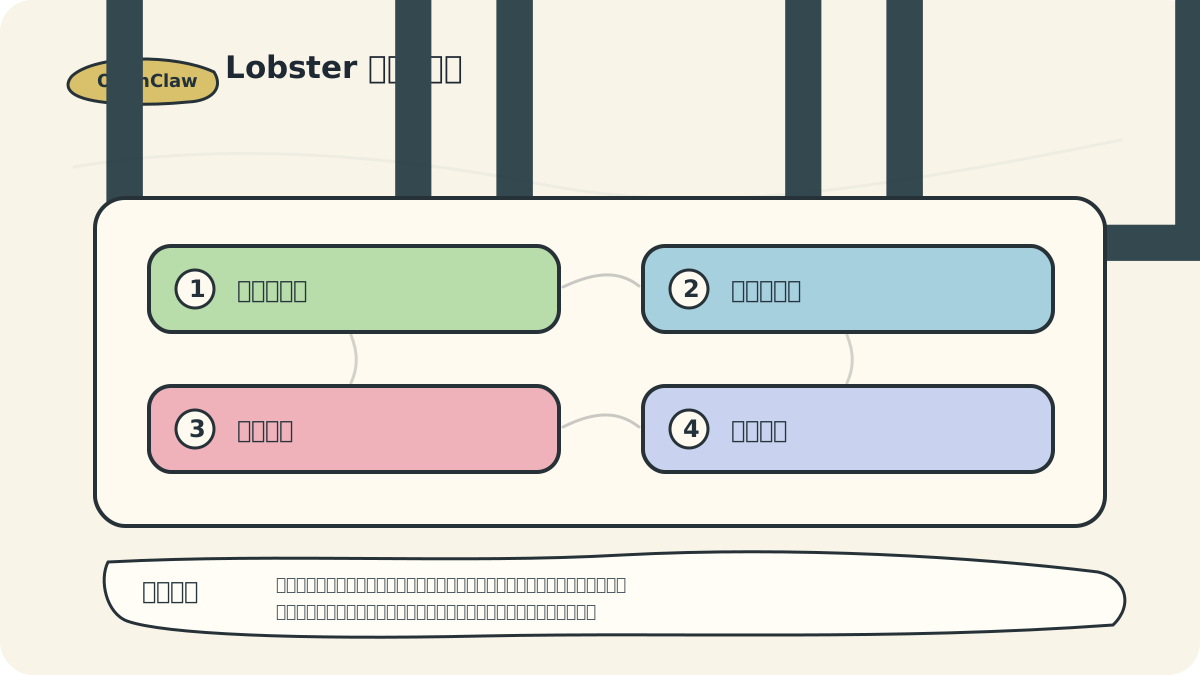
1. Why Lobster Is Needed
Many tasks cannot be safely completed with a single prompt.
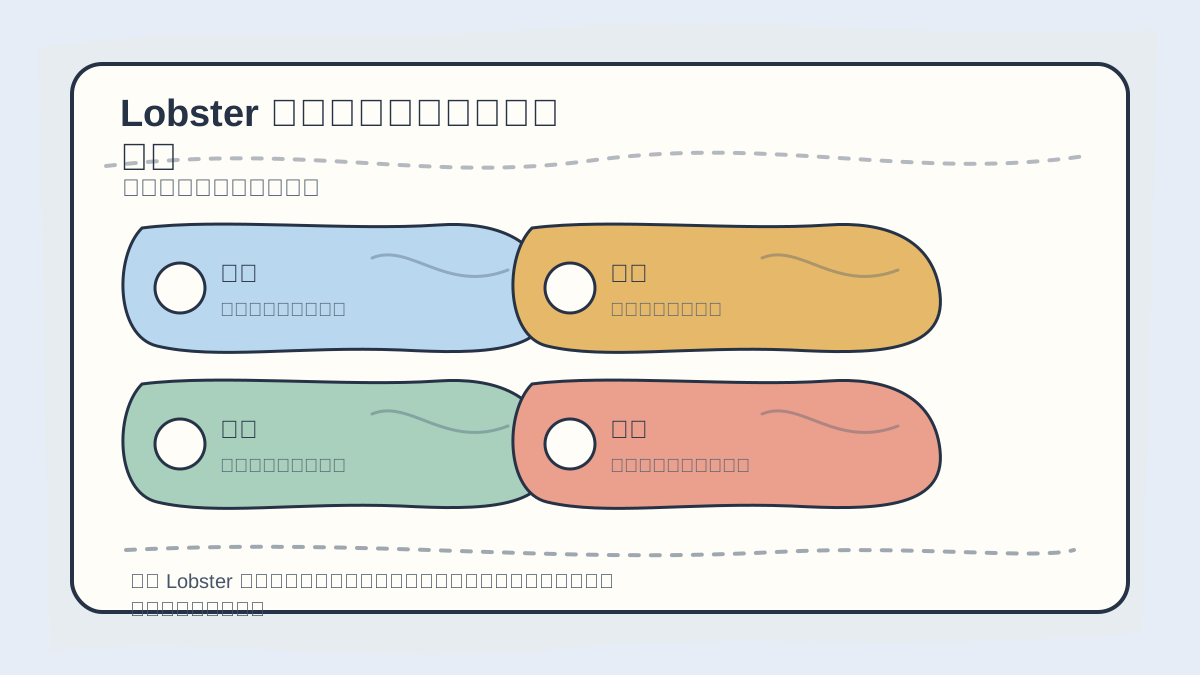
To understand Lobster workflows, first examine how the task is decomposed into steps, who approves each step, how failures trigger rollback, and how results are recorded.
For example, “Help me process today’s emails” breaks down as:
- Fetch emails.
- Classify them.
- Identify which require replies.
- Draft replies.
- Wait for user confirmation.
- Finally, send approved replies.
Letting an LLM freely execute all these steps end-to-end carries high risk. Lobster’s value lies in making step boundaries explicit—and deferring any side-effecting actions until after formal approval.
2. What Does a Lobster Workflow Look Like?
As documented officially, Lobster executes YAML/JSON workflow files containing fields such as name, args, steps, env, condition, and approval.
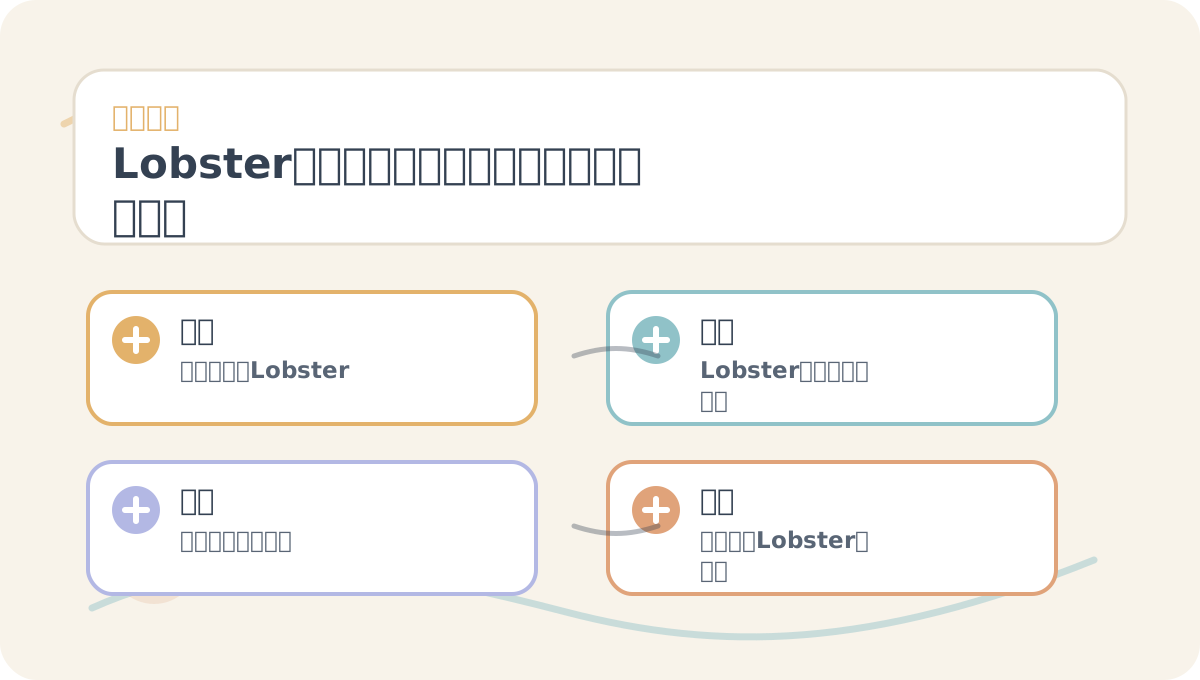
Before reading “Lobster Workflow: Turning Multi-Step Tasks into Approval-Governed Pipelines”, use the accompanying diagrams to confirm the core narrative. After reading, revisit them to identify which steps you can already execute—and which still require supplemental documentation or tooling.
A simplified example:
name: inbox-triage
steps:
  - id: collect
    command: inbox list --json
  - id: categorize
    command: inbox categorize --json
    stdin: $collect.stdout
  - id: approve
    command: inbox apply --approve
    stdin: $categorize.stdout
    approval: required
  - id: execute
    command: inbox apply --execute
    stdin: $categorize.stdout
    condition: $approve.approved
The key design insights here aren’t the commands themselves—but two structural patterns:
approval: required: Execution halts and awaits explicit human consent before proceeding.condition: $approve.approved: The next step runs only if approval was granted.
3. Visualizing the Approval Flow
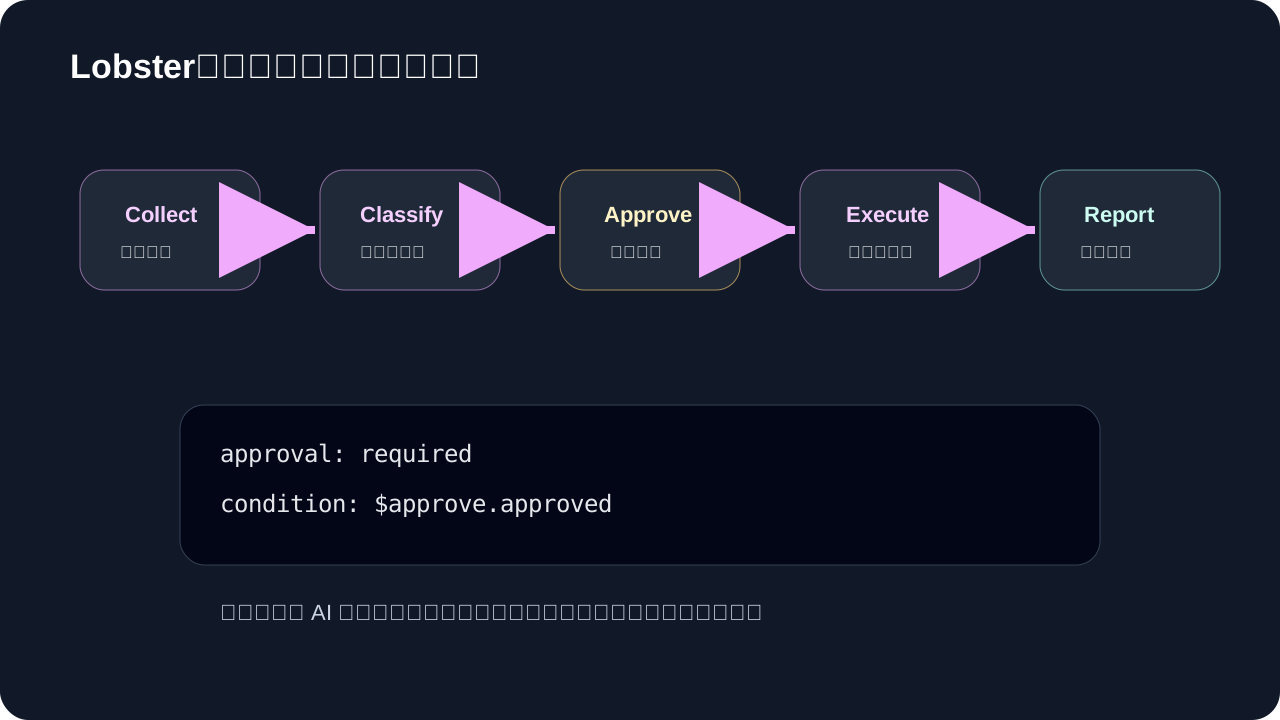
Applied to real-world tasks, this means:
- AI handles information gathering and preliminary judgment.
- The workflow guarantees clear, traceable inputs and outputs at every stage.
- You retain final authority over whether side-effecting actions proceed.
This is vastly safer than simply saying, “Please handle my email.”
4. Tasks Well-Suited for Lobster
Well-suited:
- Email classification and reply drafting
- Daily news aggregation and summarization
- Pre-release project validation (e.g., CI checks, dependency audits)
- Organizing bills, invoices, and contract documents
- Cross-repository health checks
- Pre-publication content validation (images, links, formatting)
Not well-suited:
- One-off casual conversation
- Open-ended creative tasks lacking fixed structure
- Tasks requiring extensive unstructured human judgment
- High-risk production operations without reliable rollback mechanisms
5. A Blog Publishing Check Example
Suppose you’re releasing a new course blog post. You could define:
name: blog-course-release-check
steps:
  - id: scan
    command: blog scan-course --json
  - id: validate
    command: blog validate-frontmatter --json
    stdin: $scan.stdout
  - id: preview
    command: blog build-preview --json
  - id: approve
    command: blog release-plan --preview
    stdin: $preview.stdout
    approval: required
  - id: deploy
    command: blog deploy
    condition: $approve.approved
This workflow cleanly separates validation from deployment: checks run automatically; deployment requires explicit approval.
6. Three Principles for Designing Lobster Workflows
Principle 1: Read-Only First, Write Later
Always gather data and generate previews before performing any write operation.
Principle 2: Side Effects Require Approval
Actions like sending email, deleting files, modifying databases, restarting services, or publishing content all constitute side effects—and must be gated by approval.
Principle 3: Outputs Must Be Structured
Prefer JSON output from each step over free-form natural language—it enables robust downstream conditional logic and automated parsing.
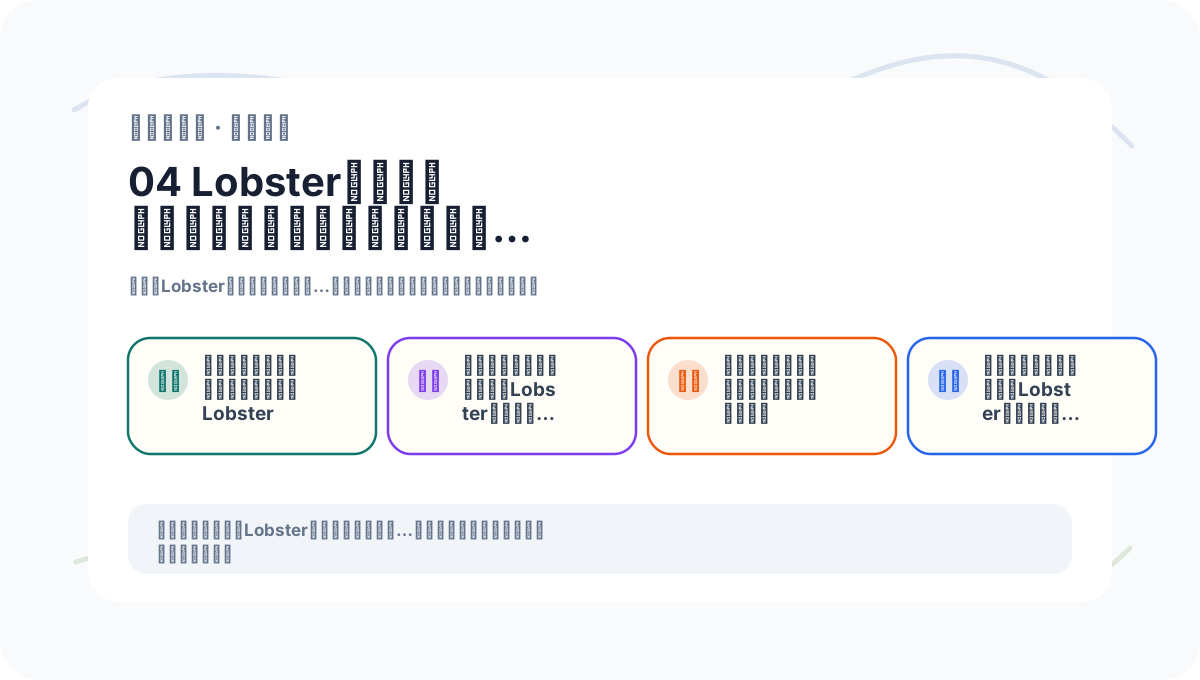
At this point, you can distill “Lobster Workflow: Turning Multi-Step Tasks into Approval-Governed Pipelines” into a concise retrospective table: clarify the central narrative first, then validate it against a small, concrete task.
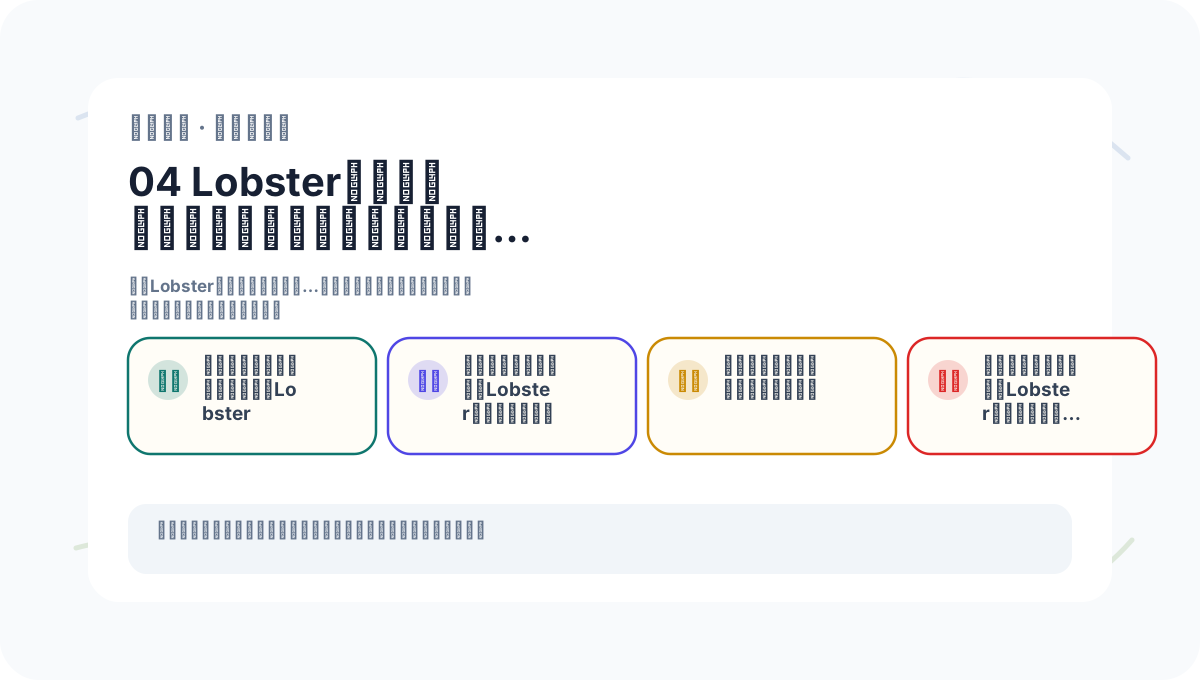
After finishing “Lobster Workflow: Turning Multi-Step Tasks into Approval-Governed Pipelines”, start by walking through a minimal working example end-to-end—then assess which steps you can already execute independently.
7. Summary
Lobster elevates OpenClaw from “a tool-calling agent” to “a process-aware orchestrator.” It shines for repetitive, decomposable tasks that benefit from structured review and approval.
In the next section, we’ll rigorously define safety boundaries: because OpenClaw can perform real-world actions, safety rules must be designed before execution—not after.
Apply This Lesson
Turn this article into AI software, model, API, and security decisions.
English Article FAQ
Use this article as evidence before choosing AI tools
How should I use this AI Tutorials article?
Use it as the implementation or learning layer, then connect the idea to AI software buyer guides, tool comparisons, benchmarks, API choices, and security checks before making a production decision.
Is this English article different from the Chinese original?
The English edition is localized for global AI readers while preserving the original diagrams, screenshots, prompts, code examples, and source context from the Chinese article.
What should I read after Lobster Workflow: Building Multi-Step, Approval-Enabled Pipelines?
Continue with AI Software Buyer Guides, AI Tools Workbench, Best AI Coding Agents, AI Model Benchmarks, OpenAI vs Anthropic API, or LLM Security Tools depending on the decision you need to make.
Can this article alone choose an AI product or model?
No. Treat the article as evidence and context, then validate fit with pricing, privacy requirements, integration effort, benchmark results, workflow tests, and fallback planning.
Continue