English translation
### Overview of Relevant Laws and Regulations
AI Article Decision Snapshot
Turn the lesson into workflow, model, budget, and security checks before choosing tools.
Use this quick snapshot before leaving the article. It keeps the next search tied to practical AI software, model/API, cost, privacy, and implementation questions.
Workflow fit
Identify the real job behind the article: coding, research, document review, support, analytics, content, or internal automation.
Model or tool decision
Decide whether the next step is a software shortlist, an AI tool comparison, an API platform choice, or a model benchmark.
Budget and usage signal
Estimate seats, API calls, prompt volume, retries, review time, and fallback work before assuming the workflow is cheap.
Security and privacy review
Check whether source code, customer data, private documents, prompts, logs, or embeddings will enter the AI workflow.
Security Risk Assessment Framework
When revisiting Privacy Issues and Legal Framework, there’s no need to tackle everything at once. Start with a simple, concrete example to verify whether the core logic is clear.
If you haven’t yet fully internalized Privacy Issues and Legal Framework, revisit the four actions outlined on this card.
Legal provisions ultimately must be implemented in products and operational processes. Do users know how their data will be used? Can they modify their consent choices? Can they request access to or deletion of their data? These capabilities require coordinated design across both user interfaces and backend workflows.
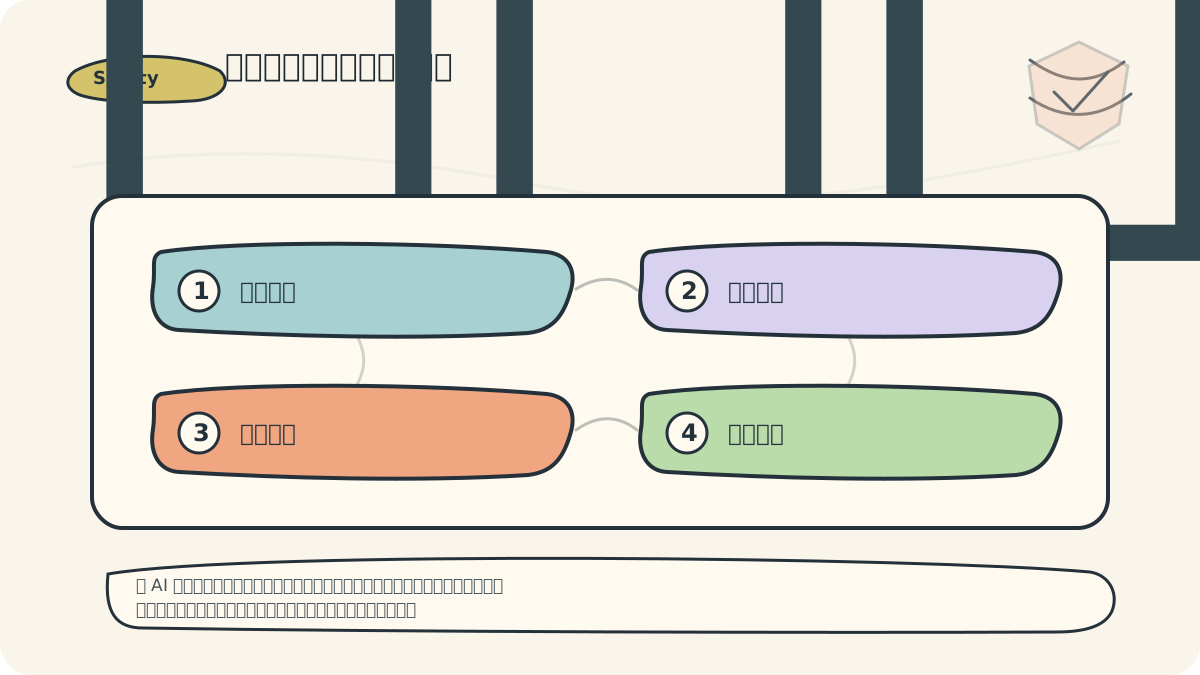
During AI feature reviews, I formulate compliance requirements as concrete, verifiable questions—not abstract principles:
- Where do users see the privacy notice?
- Which system components stop processing immediately after consent is withdrawn?
- How are audit logs updated in real time?
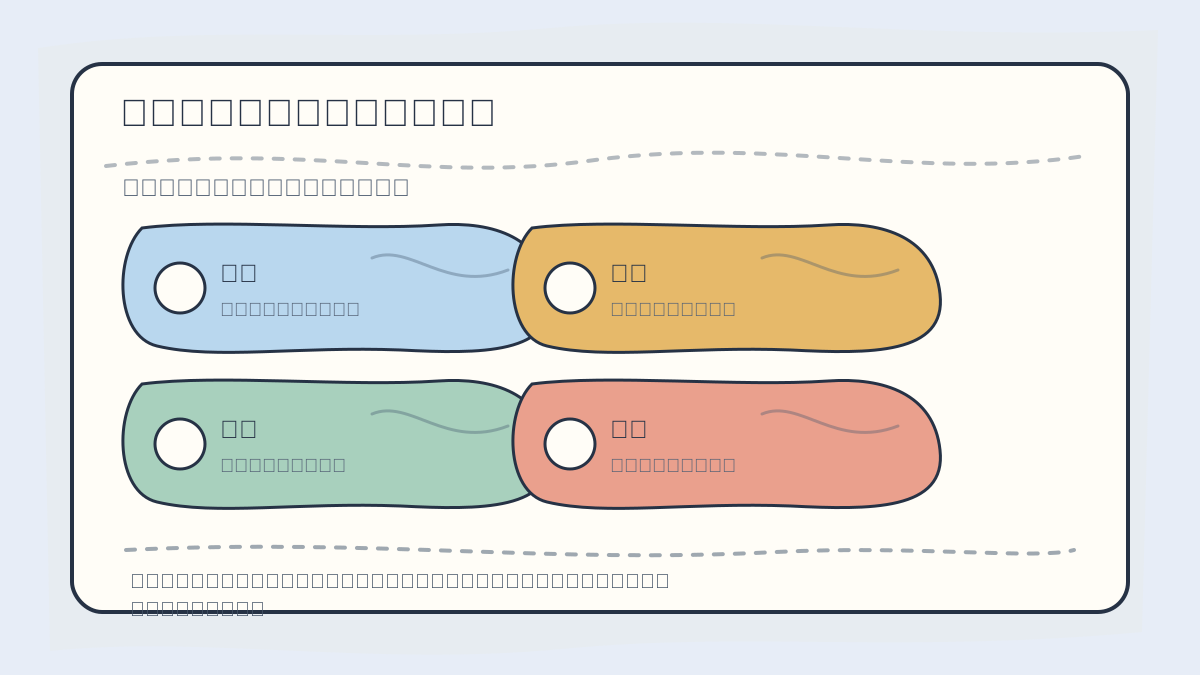
When reading Privacy Issues and Legal Framework, begin by decomposing the data lifecycle into six phases: collection, use, sharing, retention, deletion, and handling of user requests.
Overview of Relevant Laws and Regulations
In today’s rapidly evolving information landscape, protecting privacy has become a global challenge. As artificial intelligence (AI) continues to advance, understanding the relationship between privacy concerns and applicable legal frameworks is increasingly critical. This section provides an overview of key laws and regulations affecting AI applications and privacy protection—helping clarify this complex domain.
1. Global Privacy Law Landscape
As data flows across borders, privacy legislation has proliferated worldwide. Below is an overview of several pivotal regulatory frameworks:
-
General Data Protection Regulation (GDPR): Enacted by the European Union in 2018, GDPR is widely regarded as the gold standard for privacy protection. It mandates that data controllers and processors handle personal data lawfully, fairly, and transparently. Individuals retain rights—including the right to be informed about data usage and the right to request erasure (“right to be forgotten”).
-
California Consumer Privacy Act (CCPA): One of the most influential U.S. privacy laws, CCPA empowers consumers to control their personal data. For instance, consumers may request disclosure of collected data and opt out of the sale of their personal information.
-
Personal Information Protection Law of the People’s Republic of China (PIPL): Effective since 2021, PIPL establishes foundational principles for data processing—including legality, legitimacy, and necessity. Like GDPR, it enshrines robust rights for data subjects.
These laws reflect both regional differences and shared commitments—shaping how AI systems are designed and deployed globally.
2. Intersection of AI and Privacy Law
The power and breadth of AI introduce novel challenges for legal compliance. For example, training deep learning models often relies on vast volumes of personal data—raising risks of privacy infringement. Under GDPR, any AI application processing personal data must adhere to the principle of data protection by design and by default, embedding privacy safeguards throughout the AI system’s entire lifecycle.
Case Study: Consider a health-tech company developing an AI-powered diagnostic system using patient medical records. Under GDPR, the company must ensure:
- Clear, upfront communication about the purpose(s) of data use;
- Valid, informed, and freely given consent from patients;
- Mechanisms enabling patients to access and delete their data upon request.
Failure to meet these obligations could trigger substantial fines and reputational damage.
3. Key Legal Challenges
Although existing laws provide foundational guardrails, enforcement and adaptability remain persistent hurdles. Key challenges include:
-
Cross-Border Data Transfers: Divergent national standards create compliance complexity for multinational operations. Under GDPR, transferring personal data to jurisdictions lacking “adequate” privacy protections is restricted—or prohibited—without appropriate safeguards.
-
Algorithmic Transparency: Many AI systems rely on opaque “black-box” models, making it difficult for individuals to understand how their data is used or how decisions affecting them are made. This opacity may conflict with GDPR’s requirement for meaningful explanation (“right to explanation”).
-
Regulatory Lag Behind Technological Pace: AI evolves rapidly, while legislative and regulatory processes move comparatively slowly—resulting in gaps where laws fail to anticipate, constrain, or guide emerging AI practices effectively.
Summary
As AI technologies continue to mature and permeate daily life, associated legal frameworks evolve in parallel. These laws govern not only technical compliance in data collection and storage—but also uphold fundamental individual rights to privacy and data autonomy. While exploring privacy issues in depth, it is equally vital to recognize how legal frameworks profoundly shape AI design, deployment, and broader societal impact.
In the next chapter, we will delve into data subject rights—examining how laws empower individuals to assert greater control over their personal data and privacy in an increasingly AI-driven world.
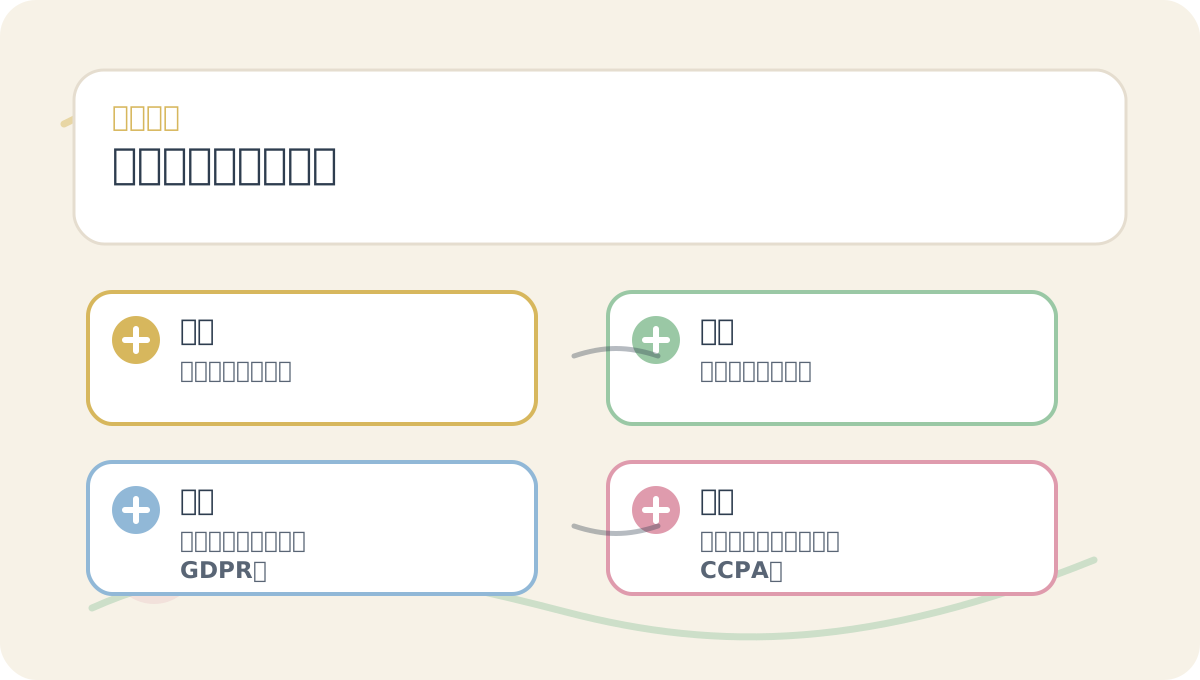
Privacy Issues and Legal Framework is best read alongside its accompanying diagrams. First confirm the core questions and judgment criteria; then proceed to conceptual explanations and step-by-step exercises—this approach helps connect ideas into a coherent, actionable thread.
Apply This Lesson
Turn this article into AI software, model, API, and security decisions.
English Article FAQ
Use this article as evidence before choosing AI tools
How should I use this AI Tutorials article?
Use it as the implementation or learning layer, then connect the idea to AI software buyer guides, tool comparisons, benchmarks, API choices, and security checks before making a production decision.
Is this English article different from the Chinese original?
The English edition is localized for global AI readers while preserving the original diagrams, screenshots, prompts, code examples, and source context from the Chinese article.
What should I read after ### Overview of Relevant Laws and Regulations?
Continue with AI Software Buyer Guides, AI Tools Workbench, Best AI Coding Agents, AI Model Benchmarks, OpenAI vs Anthropic API, or LLM Security Tools depending on the decision you need to make.
Can this article alone choose an AI product or model?
No. Treat the article as evidence and context, then validate fit with pricing, privacy requirements, integration effort, benchmark results, workflow tests, and fallback planning.
Continue